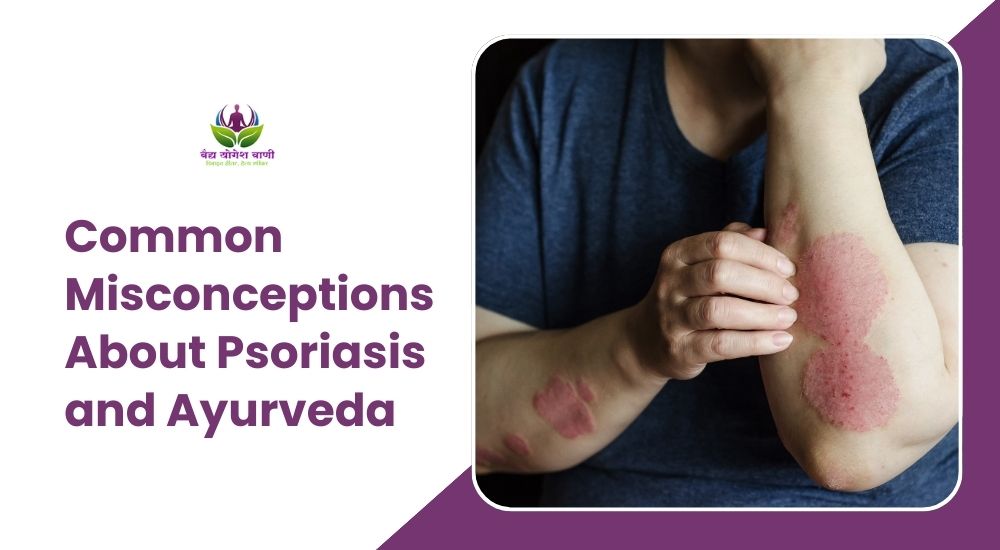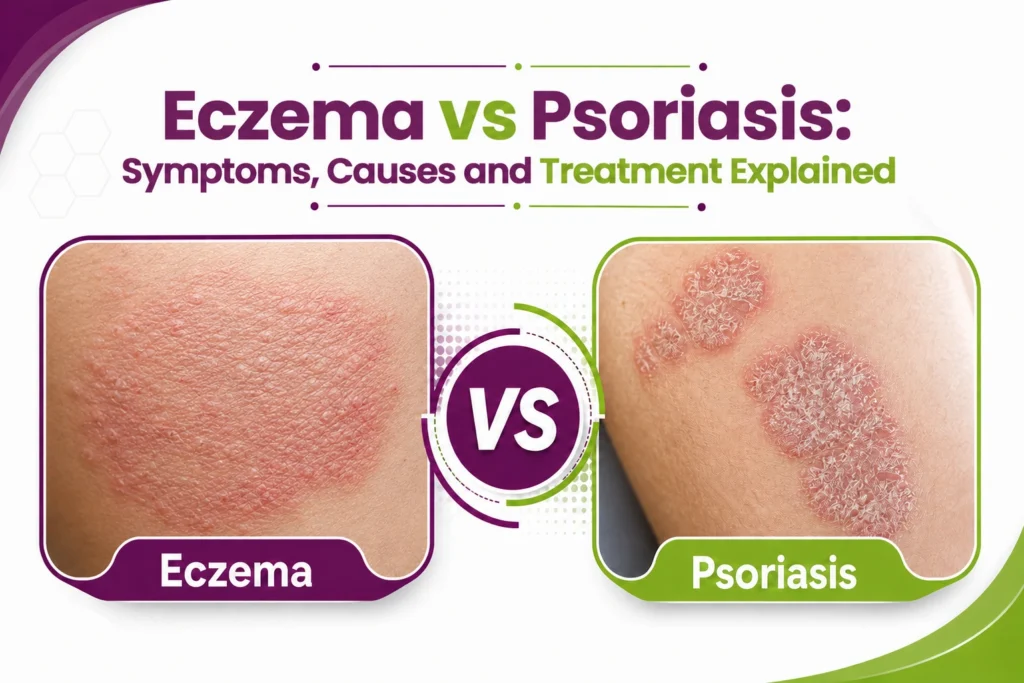
You may have seen a red, itchy spot on your body that hasn’t gone away. If you look at some internet site, you’ve likely found that eczema and psoriasis look very similar in pictures of both of them. You’re not alone in being confused about this; even some experienced physicians must look at it twice before coming to an exact diagnosis.
The main point of both eczema and psoriasis is that they are skin diseases. Both can cause redness, itchiness, and aggravation to those suffering from them. However, this does not mean that they are interchangeable — they each have distinct causes, appearance patterns, and treatments.
The reason being positive identification and thereby utilizing the appropriate therapy for the disorder will create a positive outcome; however, utilizing the wrong kind of treatment for one of these two disorders will usually create an undesired outcome. This article will give details on everything that you should understand about eczema versus psoriasis.
What Is Eczema?
Eczema occurs when the skin is inflamed, dry and itchy. People with eczema also have poorly functioning skin barriers, and thus are skin is unable to keep in moisture, which allows irritants to enter skin easly. Eczema is widespread, affecting approximately 10% of the global population; the majority (80%) develop eczema at a young age.
Also, Eczema is not an infectious disease; which means you do not become infected with the disease from contact with someone who currently has the disease.
Common Eczema Symptoms
- Itching: Often worse at night and can disrupt sleep Dry, skin that cracks or flakes
- Red to brownish-grey patches especially in the folds of elbows, knees, neck, wrists and ankles
- Small, raised bumps that may weep fluid if scratched
- Thickened or leathery skin in areas that are scratched repeatedly over time
One of the main things about eczema is that the itching usually comes before the rash. People often scratch an area before the visible skin changes appear.
What Triggers Eczema?
- Dry or cold weather: Skin loses moisture faster in humidity Soaps, detergents and fragrances that irritate the skin
- Sweat: After exercise
- Certain fabrics: Wool and synthetic fibers are irritants
- Stress: Emotional stress is a well-known eczema trigger
- Allergens: Dust mites, pet dander pollen
- Certain foods: Dairy, eggs, nuts in children with eczema
What Is Psoriasis?
Psoriasis is a condition. This means the immune system attacks skin cells causing them to multiply too fast. Normal skin cells take a month to grow and shed. In psoriasis this process happens in a few days, which is why scales and thick patches build up on the surface. Psoriasis affects about 125 million people worldwide. Is a lifelong condition that tends to come and go in cycles.
Psoriasis is not contagious. Many people with psoriasis feel self-conscious about patches but there is no risk of passing it to others.
Common Psoriasis Symptoms
- Thick, elevated areas of skin with silvery scales
- Dry skin can become so cracked that it bleeds when the scales are removed by scratching
- Itching, burning or pain in the area around the lesions
- Thickening and pitting of the nails: Nail psoriasis occurs in approximately half of psoriasis cases
- swollen joints: Psoriatic arthritis, which is a type of arthritis occurring in psoriasis that is estimated to affect 30% of psoriasis cases
The most prevalent type of psoriasis is plaque psoriasis, which usually manifests itself in the form of plaques on the scalp, elbows, knees, and lower back. Typically the patches have well-defined borders. This is different from the more diffused and spreading nature of eczema patches.
What causes Psoriasis?
- Stress: One of the common and significant triggers Infections: Especially streptococcal throat infections
- Certain medications: Lithium, beta-blockers and antimalarials can trigger flares
- Injury to the skin: Cuts, burns or even a tattoo can trigger psoriasis
- Heavy alcohol consumption
- Smoking
- dry weather
Eczema vs Psoriasis: Key Differences
| Feature | Eczema | Psoriasis |
| Type of condition | Inflammatory skin disorder | Autoimmune disease |
| Cause | Skin barrier dysfunction + allergens/irritants | Immune system overreaction |
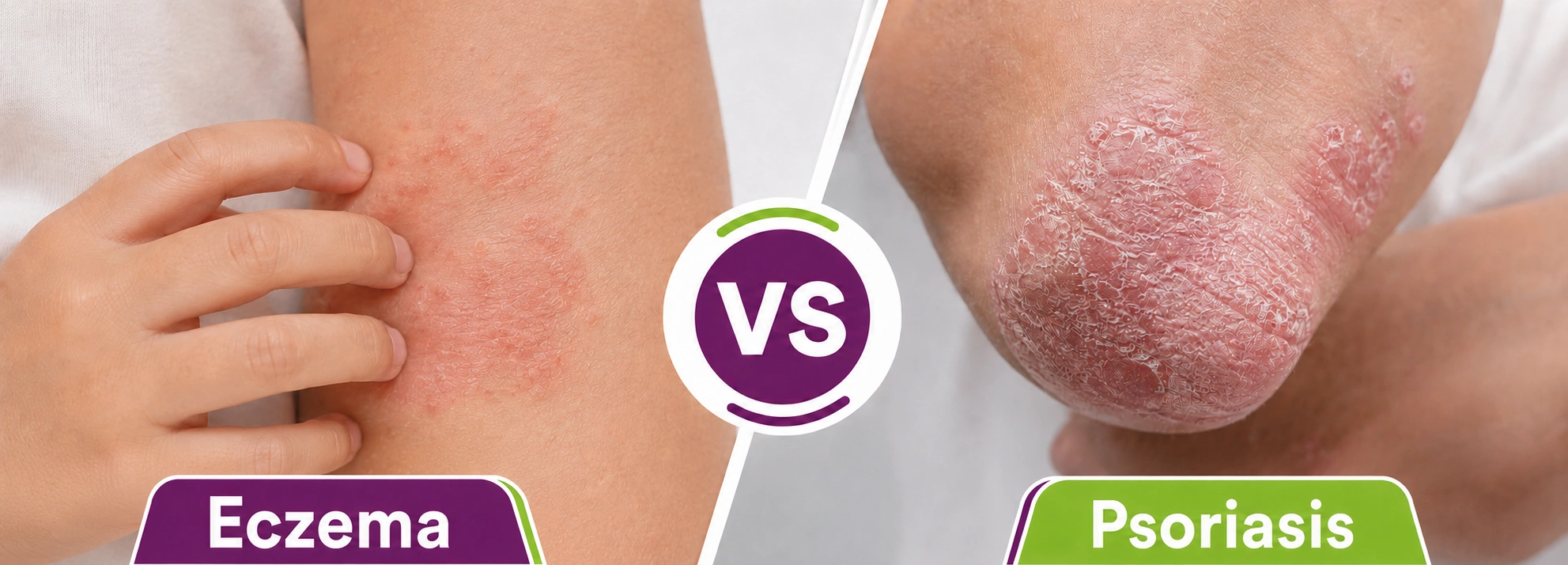
| Appearance | Red, weeping, crusting patches | Thick, silvery-scaled plaques |
| Itching | Intense, often unbearable | Present but usually less severe than eczema |
| Common locations | Inside elbows, behind knees, neck, face (in babies) | Elbows, knees, scalp, lower back, nails |
| Skin texture | Soft, weepy, sometimes cracked | Thick, raised, scaly |
| Who it affects most | Commonly starts in childhood | Can start at any age — peaks in 15–35 and 50–60 |
| Family history link | Yes — strongly linked to asthma and hay fever | Yes — strong genetic component |
| Other conditions linked | Asthma, allergic rhinitis | Psoriatic arthritis, cardiovascular disease |
How Do Doctors differenciate between both of them?
Since both conditions cause irritated skin diagnosis is not always straightforward. A dermatologist will look at the appearance, edges and scale pattern to tell the conditions apart. Psoriasis plaques have defined borders with silvery scales while eczema patches have less defined edges and look more raw or weepy.
Do not try to diagnose yourself. Many people try over-the-counter treatments without knowing which condition they actually have. Using the treatment can make both eczema and psoriasis worse. If you have a persistent skin rash see a dermatologist than guessing.
Treatment Options: Eczema vs Psoriasis
Both conditions are manageable. Neither has a cure but both can be controlled effectively with the right treatment plan.
Eczema Treatment
- Moisturizers: Strongly recommended as the mainstay of eczema control
- corticosteroids: Flare steroids creams that can reduce skin inflammation and itchiness
- Topical calcineurin inhibitors: A steroid free alternative for sensitive skin areas
- Antihistamines: Mainly to alleviate itchiness besides they help with the other symptoms indirectly
- Dupilumab: Biologic injectable for treatment of moderate to severe eczema.
- Avoiding triggers: Central to managing eczema is to identify and avoid irritants and allergens
Psoriasis Treatment
- Topical treatments: Corticosteroid creams, vitamin D analogues, coal tar and retinoids applied to the skin
- Phototherapy: Controlled exposure to ultraviolet light under medical supervision
- Systemic medications: Methotrexate, cyclosporine and acitretin for severe or extensive psoriasis
- Biologic therapies: Newer targeted treatments that block specific parts of the immune system
- Lifestyle changes: Reducing alcohol, quitting smoking, managing stress and maintaining a weight all improve psoriasis control
Final Thoughts
Eczema and psoriasis are two of the most common chronic skin conditions. They both affect the skin cause discomfort and require long-term management.. They have different root causes, different triggers and respond to different treatments. If you have been living with a skin condition. Are not sure what it is, the most important thing you can do is get a proper diagnosis from a dermatologist. With the diagnosis and the right treatment plan both eczema and psoriasis can be managed well. Most people, with either condition live comfortable lives. They just need to understand their skin and work with the right medical team.