
A migraine is not “just a bad headache.” For many people, it can disrupt work, sleep, mood, and daily life again and again.
That is why so many people start looking beyond temporary relief. They want to understand why migraines keep coming back and whether there is a deeper way to manage them. This is where Ayurveda treatment for migraine draws attention. Instead of looking only at the pain, Ayurveda tries to understand the body pattern, triggers, digestion, lifestyle, sleep, stress, and overall imbalance that may be contributing to repeated attacks.
In Ayurveda, migraine is commonly discussed under conditions like Ardhavabhedaka, and the treatment approach is usually personalized. The traditional idea is not just to suppress symptoms, but to reduce recurrence by correcting underlying imbalance, especially when factors like stress, irregular food habits, poor sleep, heat, acidity, and mental strain are involved. The Ministry of Ayush has publicly listed Ayurvedic formulations in relation to Ardhavabhedaka. At the same time, review literature notes that the Ayurvedic approach typically combines diet, lifestyle, procedures, and medicines tailored to the individual.
What Does Migraine Pain Feel Like
In modern medicine, migraine is a neurological condition that often causes one-sided or throbbing headache, along with nausea, vomiting, and sensitivity to light and sound. Some people also experience aura symptoms, such as visual changes or tingling.
Migraine symptoms can vary from person to person, but common symptoms include:
- throbbing or pulsating headache
- pain on one side, though both sides can be involved
- nausea or vomiting
- sensitivity to light, sound, or smell
- visual aura, such as flashing lights or zig-zag lines, in some people
- worsening with routine activity
This is important because many people ignore migraines for too long, assuming they are only stress or “gas.” Repeated migraines deserve proper evaluation, especially if the pattern is changing or becoming more severe. Many people also look for migraine home remedies for quick natural relief.
Migraine in Ayurveda: Understanding Dosha Imbalance and Root Causes
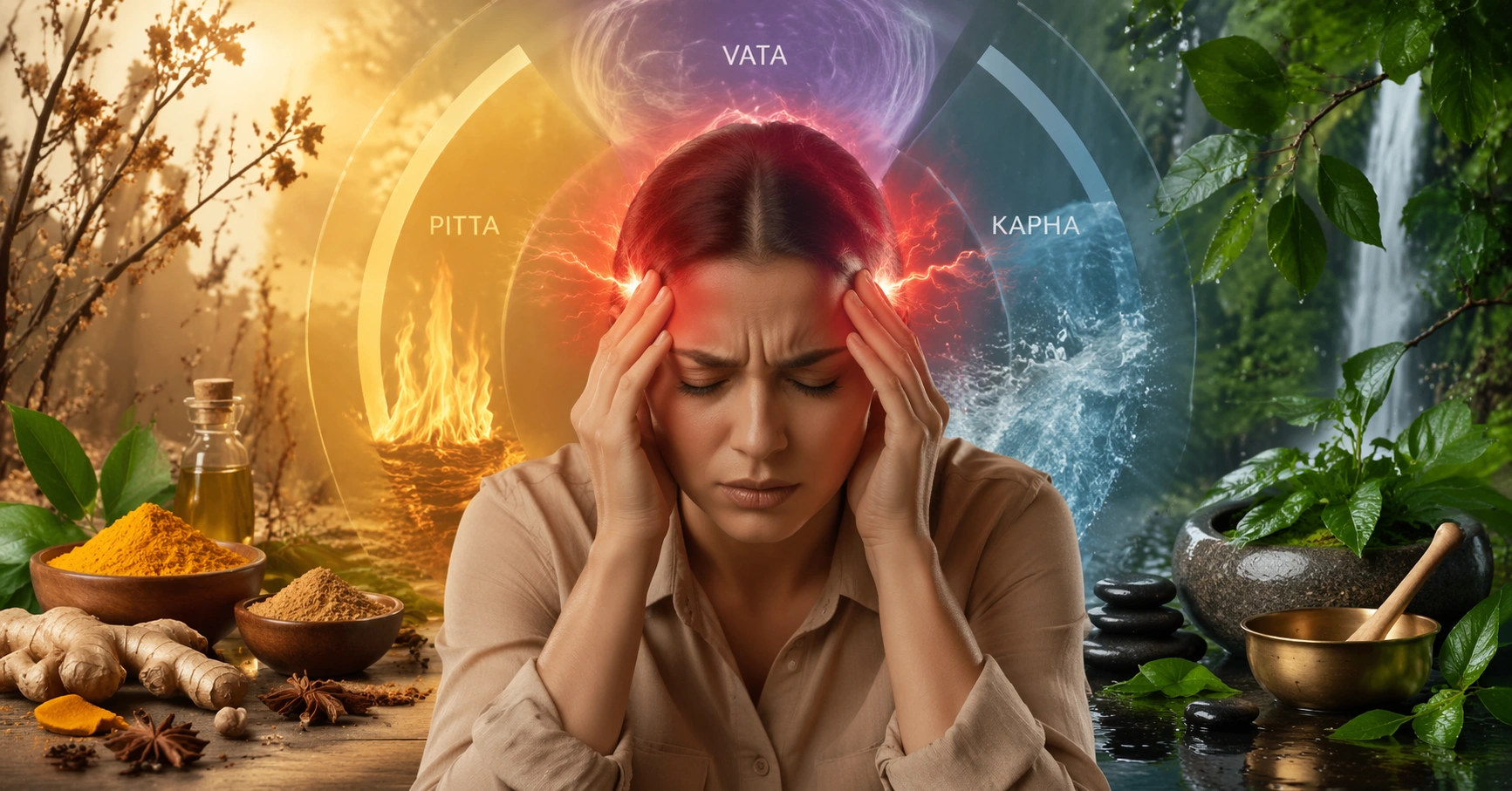
Ayurveda generally sees recurrent headaches through the lens of dosha imbalance, poor digestion (Agni disturbance), accumulated toxins (Ama), and aggravating lifestyle triggers. In practice, many Ayurvedic clinicians describe migraine patterns in terms of Vata and Pitta imbalance, especially when a person experiences stress, irregular eating, poor sleep, acidity, irritability, heat intolerance, or a burning sensation during attacks. This is a traditional framework, not a lab diagnosis. Review literature on Ayurveda and migraine commonly discusses these ideas in relation to Ardhavabhedaka.
In simple words, Ayurveda often asks:
- What is triggering the headache again and again?
- Is digestion weak or irregular?
- Is stress constantly aggravating the nervous system?
- Are food and sleep timings disturbed?
- Is there a Vata pitta imbalance migraine pattern?
- Does the patient need calming, cleansing, nourishment, or all three?
This is why migraine treatment in Ayurveda and Ayurvedic migraine cure approaches are usually individualized. Two people may both have migraine, but one may have a strong stress and insomnia pattern, while another may have heat, acidity, and light sensitivity. Their treatment plans may not be identical.
Effective Ayurvedic Treatments for Migraine Relief and Management

Ayurveda takes a holistic approach to migraine relief by focusing on the root cause rather than only managing the pain. It aims to balance the body’s doshas, improve digestion, reduce stress, and remove toxins that may trigger headaches. With the right combination of therapies, diet, and lifestyle changes, Ayurveda can naturally support long-term migraine management. Common Ayurvedic approaches include:
1. Panchakarma Therapy (Detoxification)
Panchakarma is one of the most important Ayurvedic therapies for migraine relief. According to Ayurveda, it helps cleanse the body, remove toxins, and restore internal balance, which may reduce the frequency and intensity of migraines. Panchakarma therapies like Vamana, Virechana, Basti, Nasya, and Raktamokshana are usually done under the guidance of an Ayurvedic practitioner for safe and effective results.
Benefits of Panchakarma for migraine:
- Helps detoxify the body naturally
- May reduce migraine triggers linked to toxin buildup
- Supports better circulation and relaxation
- Promotes balance of aggravated doshas
- Can improve overall mental and physical well-being
2. Shirodhara therapy
Among the best-known procedures, shirodhara therapy for migraine is often discussed because it is traditionally used to calm the mind and support relaxation. In practice, it involves a steady stream of liquid, often oil or another prescribed medium, applied to the forehead in a controlled way under supervision. People are often drawn to shirodhara because migraine is frequently linked with:
- stress
- mental fatigue
- sleep disturbance
- nervous system overstimulation
3. Herbal Remedies
Ayurvedic herbal remedies are often used to calm the mind, reduce inflammation, and support the nervous system. Many readers search for Ayurvedic herbs for migraine relief, but this topic needs caution. Certain herbs may help lower stress, improve digestion, and ease migraine-related discomfort. These remedies are usually chosen based on the individual’s body type and symptoms. Popular herbal support options may include:
- Brahmi for calming the mind
- Ashwagandha for stress management
- Ginger for reducing nausea and inflammation
- Shankhpushpi for mental relaxation
- Coriander or fennel for cooling and digestive support
4. Diet & Nutrition (Ahara)
In Ayurveda, food plays a major role in preventing and managing migraines. Eating fresh, light, and easily digestible meals can help reduce internal imbalance and prevent common dietary triggers. A proper migraine-friendly diet also supports digestion, which is considered essential in Ayurvedic healing. Diet tips for migraine relief:
- Eat freshly prepared and warm meals
- Avoid overly spicy, oily, and processed foods
- Stay hydrated throughout the day
- Reduce caffeine and packaged snacks
- Include seasonal fruits and simple homemade foods
5. Lifestyle Modifications (Vihara)
Lifestyle habits can strongly influence migraine episodes, and Ayurveda emphasizes creating a calm and balanced daily routine. Poor sleep, stress, screen overuse, and irregular meal timings may increase migraine frequency. Healthy lifestyle changes help reduce these triggers and improve overall well-being. Helpful lifestyle changes include:
- >Maintain a regular sleep schedule
- Avoid skipping meals
- Limit excessive screen time
- Practice stress management daily
- Follow a balanced daily routine
6. Yoga & Pranayama
Yoga and pranayama can be very effective in reducing stress and tension, which are common migraine triggers. Gentle yoga postures improve blood flow and help the body relax, while breathing exercises calm the nervous system. Regular practice may help reduce the severity of migraines over time.
Useful yoga and breathing practices:
- Anulom Vilom for calming the mind
- Bhramari Pranayama for stress relief
- Child’s Pose for relaxation
- Cat-Cow stretch for releasing tension
- Shavasana for deep rest and recovery
How Ayurvedic Treatment for Migraines Usually Works
The usual process of Ayurvedic treatment for migraine involves the detailed analysis of the patient’s past medical history, along with an in-depth evaluation of the root causes. Thus, a comprehensive assessment and other key points are mentioned below:
1. Detailed Consultation and Trigger Analysis
The first step in Ayurvedic migraine care is a detailed consultation combined with trigger analysis. The practitioner may ask about the headache pattern, duration, side of pain, nausea, aura, acidity, dizziness, sleep quality, food habits, bowel pattern, stress levels, and other related concerns. Since migraine is often influenced by repeated triggers, identifying these patterns helps build a more targeted and effective treatment approach. Common triggers that may be evaluated include:
- Skipping meals
- Dehydration
- Poor sleep
- Emotional stress
- Bright light or loud sound
- Strong smells
- Excessive screen time
- Spicy, oily, or unsuitable foods in sensitive individuals
2. Lifestyle and Daily Routine Adjustments
Lifestyle correction is often a major part of Ayurvedic migraine treatment. Daily habits such as irregular eating, lack of sleep, overstimulation, and poor stress management can make migraine attacks more frequent. By improving routine and reducing avoidable triggers, Ayurveda aims to support better long-term relief and overall balance. This may include guidance such as:
- Eating meals on time
- Avoiding long fasting gaps
- Staying properly hydrated
- Improving sleep timing and quality
- Reducing screen exposure and overstimulation
- Avoiding foods that repeatedly trigger headaches
- Following calming practices for stress management
3. Personalized Ayurvedic Medicines and Support
Ayurvedic medicine for migraine is usually selected according to the individual’s symptoms, body pattern, digestion, and stage of discomfort. Some traditional formulations are discussed in Ayurvedic practice for migraine-related conditions such as Ardhavabhedaka, but no medicine should be used without proper consultation. Safe and effective treatment depends on individualized assessment, especially if the person is already taking other medicines. Important points to remember:
- Ayurvedic migraine treatment is usually personalized
- Medicine choice depends on the individual case
- Self-medication may not be safe
- Herbal or herbo-mineral products should only be taken under qualified supervision
What Results Can Patients Realistically Expect?
A realistic way to understand Ayurvedic migraine care is to think in terms of management and improvement, not an instant cure. Some people may experience noticeable relief, while others may need longer follow-up or a combination of Ayurvedic and conventional care.
The usual goals may include:
- Reducing migraine frequency
- Lowering attack intensity
- Improving recovery between episodes
- Identifying triggers more clearly
- Supporting better sleep and digestion
- Improving overall quality of life
There is no one-size-fits-all result, and expectations should remain practical.
When to Seek Urgent Medical Help for Migraines
Identifying the requirement for urgent medical evaluation is important. Not every headache is a migraine, and not every severe headache should be managed through routine migraine care. Seek urgent medical help if there is:
- sudden, explosive, very severe headache
- headache with fever and stiff neck
- new headache with weakness, confusion, fainting, or seizures
- Headache after a head injury
- double vision, numbness, or trouble speaking
- aura lasting unusually long
- a major change in your usual migraine pattern
- headache lasting more than 72 hours in some contexts
Ayurveda can be part of care, but red-flag headaches need medical assessment without delay.
Final thoughts
Ayurveda treatment for migraine appeals to many people because it looks beyond the headache itself. It tries to understand the body’s pattern, triggers, digestion, stress load, sleep quality, and dosha imbalance that may be causing migraines to return again and again. In that sense, Ayurveda aims to address the root cause behind the pain, not just the pain episode.
At the same time, readers should stay realistic and safe. Migraine is a medical condition. Complementary and traditional care can be helpful, but treatment should be personalized, supervised, and integrated with proper medical evaluation when needed. Evidence for complementary approaches is promising in some areas but still limited or mixed in others.