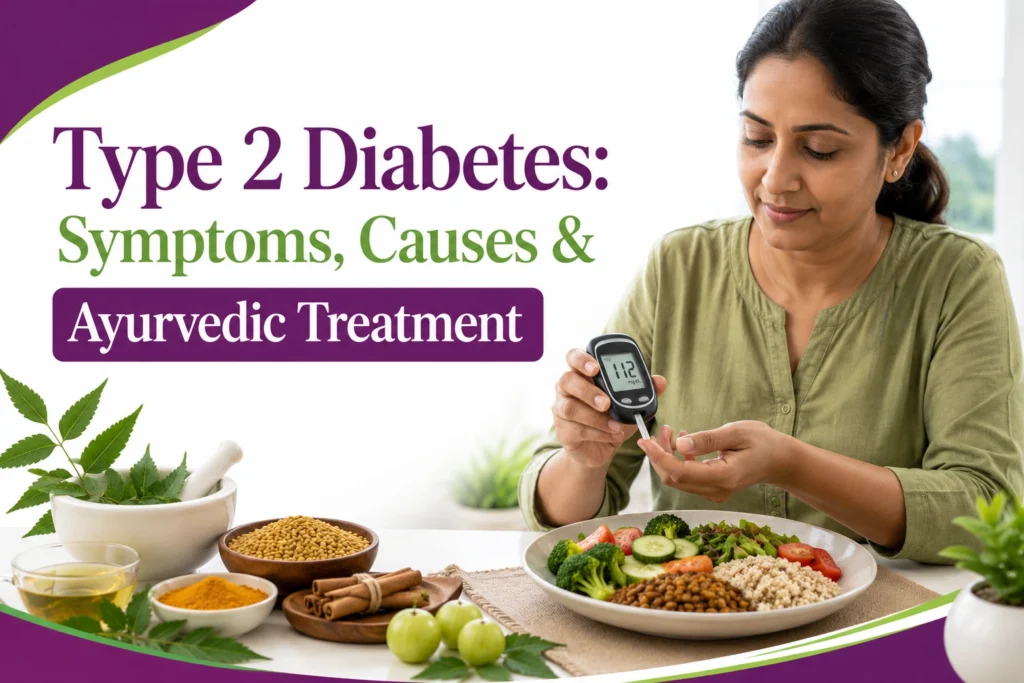
Type 2 diabetes is a long-term health condition where the body cannot use insulin properly. This results in elevated blood sugar levels. Most individuals remain unaware of their initial type 2 diabetes symptoms because the condition progresses at a gradual pace over multiple years. The common symptoms include excessive urination, increased thirst, exhaustion, vision problems, delayed wound healing, and foot numbness.
Insulin resistance together with family history, excess weight, low physical activity, poor dietary habits, stress and aging process form the primary reasons for developing type 2 diabetes. The appropriate treatment for type 2 diabetes requires patients to follow a healthy diet and exercise regularly while keeping their weight under control and monitoring their blood sugar levels and taking prescribed medications and attending scheduled medical appointments.
The Ayurvedic treatment for type 2 diabetes supports people who want to manage their lifestyle, digestion, body weight and sugar levels but those who receive medical treatment should never stop taking their prescribed medications. The CDC describes type 2 diabetes as a condition where the body uses insulin ineffectively while failing to maintain normal blood sugar levels.
What Is Type 2 Diabetes?
Type 2 diabetes occurs when blood sugar levels rise because the body fails to use insulin properly. Insulin is a hormone that helps sugar to enter body cells from the bloodstream for energy. Inadequate processing of this system leads to sustained elevated blood sugar levels. The basic definition of type 2 diabetes states that your body produces insulin while your cells fail to respond adequately to it.
Type 2 diabetes in simple words, means your body is making insulin, but your cells are not responding to it properly. This is called insulin resistance.The pancreas loses its ability to produce sufficient insulin for blood sugar management as time passes. The CDC states that prediabetes and type 2 diabetes develop from insulin resistance.
How Type 2 Diabetes Affects Blood Sugar
When you eat food, your body breaks it into glucose, or sugar. This sugar enters your blood.
Normally, insulin helps move this sugar into cells. But in type 2 diabetes, cells resist insulin, so sugar stays in the blood. High sugar for a long time can affect the heart, eyes, kidneys, nerves, and blood vessels. WHO describes diabetes as a chronic disease with elevated blood glucose that can damage the heart, blood vessels, eyes, kidneys, and nerves over time.
Type 1 vs Type 2 Diabetes: Basic Difference
Type 2 Diabetes Symptoms You Should Not Ignore
Many people miss early signs because symptoms are mild. Some people may not feel any symptoms at first.
CDC notes that type 2 diabetes symptoms often develop over several years and may go unnoticed for a long time.
The most common symptoms of type 2 diabetes include:
Causes of Type 2 Diabetes
The causes of type 2 diabetes are usually linked to insulin resistance, family history, weight, eating habits, and lifestyle.
Cleveland Clinic states that the main cause of type 2 diabetes is insulin resistance, where certain cells do not respond properly to insulin.
- Insulin resistance: In such condition body needs more insulin to control blood sugar. Initially to handle the increased demand of insulin pancreas make extra insulin but with time it becomes difficult for pancreas to fulfill insulin demand of body.
- Inability of pancreas to produce insulin: again when the insulin resistance continues for long time the pancreas is unable to produce enough insulin. This situation results in sudden rise in blood sugar levels.
- Family history: family history and genetics play important role in type-2 diabetes. You may be on higher risk. Though family history doesn’t ensure that you will be get type-2 diabetes but you have to be cautious. Genetic history along with dietary habits can trigger other causes.
- Weight loss: obesity can be a major cause of type 2 diabetes. Excess weight and unhealthy dietary practices can increase insulin resistance.
- No-Physical activities: unhealthy diet, consumption of lots of carbs and junk food along with no physical activities is prime example of a bad lifestyle. This result in excess fat gain and eventually insulin resistance.
- Age and stress: poor sleep and high stress are also natural triggers for type-2 diabetes. Also, the risk of getting type-2 increases with age. Though nowadays due to an unhealthy lifestyle the younger generation are also at high risk of type-2 diabetes.
Type 2 Diabetes Ayurvedic Treatment
Ayurveda– an ancient holistic, Indian traditional medicine system. In ayurveda the aim is treating the diseases from its root. Thus it aims to bring a balance between body, soul and mind through panchkarma and other ayurvedic treatment methods.
Many people who search for type-2 diabetes ayurvedic treatment want’s a more natural and holistic treatment approach where the disease is treated from its root under a qualified ayurvedic doctor.
But before talking about the treatment method its important that one should know how Ayurveda describes diabetes as Prameha or Madhumeha. So, according to ayurvedic view Madhumeha is due to unhealthy lifestyle, imbalance in energy chakras of body and issues in digestion system.
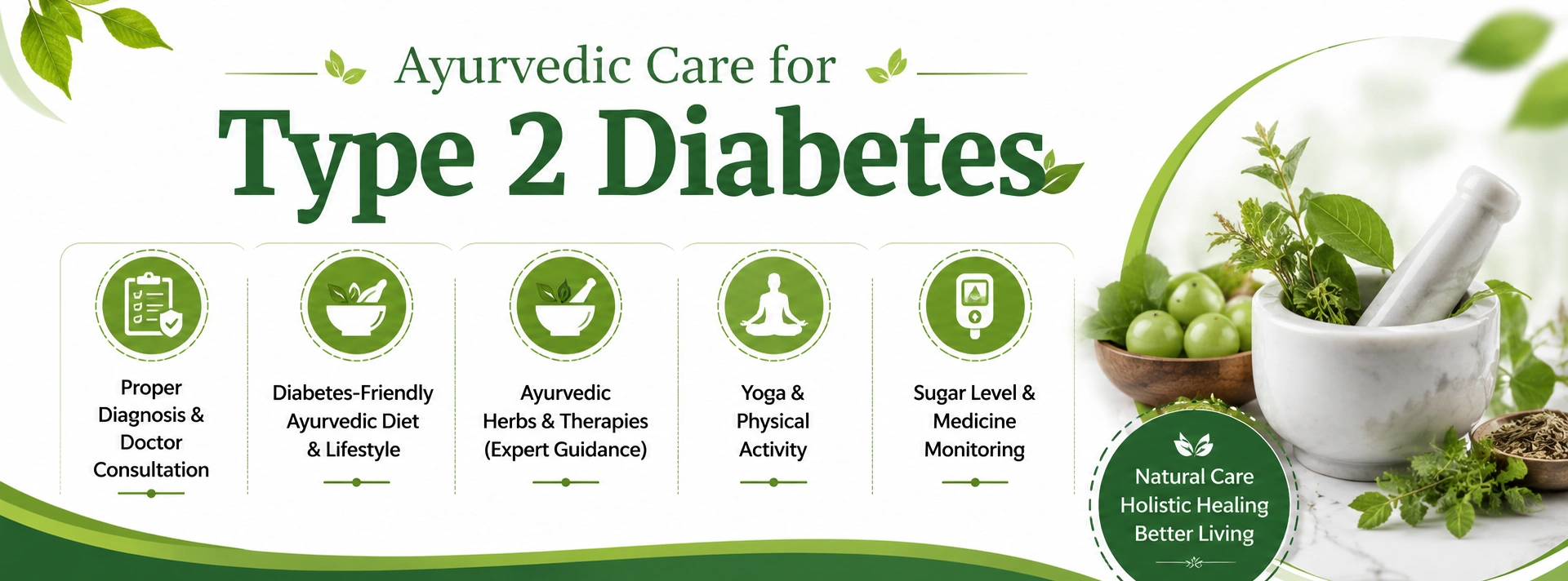
5-step personalized ayurvedic treatment plan for treating Type 2 Diabetes:
Step 1: Start with Proper Diagnosis and Doctor Consultation
If not treated on time Diabetic type-2 can cause serious issues in kidney ( kidney failure ) , heart ( heart attack ) and nerves (stroke). So the forst step in ayurvedic treatment of diabetes involves diagnosis and doctor’s consultation.
- Diagnoses are done in form of – fasting blood sugar test, post-meal sugar test, glucose tolerance test and HbA1c test. Also, apart from these iniatial tests, regular monitoring at home can be easily done by using a glucometer.
- Type-2 diabetes is not same for all thus, the treatment duration and method are planned accordingly. Also, no herb and remedies are same for all. What might work for one might not work for other thus, even if a person is having regular allopathic diabetic medicines he/she must share that details with the consultant doctor.
Step 2: Follow a Diabetes-Friendly Ayurvedic lifestyle and Diet
Diet is a major part of type 2 diabetes ayurvedic treatment, and following a proper diabetic diet plan can help support better blood sugar management. Lifestyle changes are not optional. They are a major part of diabetes management.
Along with lifestyle changes Food also plays a big role in diabetes care. The goal is not to stop eating everything. The goal is to eat smart portions and choose better foods.
- Ayurvedic lifestyle support may focus on: Regular meal timing, Avoiding overeating, Reducing sweets and heavy foods (to support digestion), Daily movement, Weight control ( Even small weight loss can make a difference in blood sugar, cholesterol, and blood pressure. Mayo Clinic notes that losing even 5% body weight may improve blood sugar and related health markers in overweight people).
- Diet: apart from healthy lifestyle ayurvedic treatment also suggest for inclusion of natural food, spices and fruits which keep blood sugar levels in control. Some of the common and easily available options are: bitter guard (karela), fenugreek seed (sonf) and cinnamon powder which is best source for improving insulin sensitivity.
- Better sleep routine (Poor sleep can affect hunger, stress hormones, and sugar control)
- Stress reduction (Stress can affect eating habits and blood sugar). These steps can support overall diabetes management.
Step 3: Ayurvedic therapies and Herbs (Only Under Expert Guidance)
Ayurvedic therapies and herbal remedies are also very important steps of treatment method. Panchkarma therapy like Sodhana– ayurvedic detoxification (Vamana, Virechana, and Basti) and oil therapies using Aromatherapy and replacement of regular saturated oil like palm oil and animal fat with unsaturated oil seeds options like olive oil and sesame oil.
Some naturally occurring plants and plant products have great properties for diabetic control. Some of them includes:
Gymnema Sylvestre: This is also famously known as sugar cutter. It help in reducing cravings for sugar that help in supporting balanced blood sugar level.
Neem: best known for its anti-diabetic properties. This is best naturally available plant with great ayurvedic properties in maintaining blood sugar level.
Turmeric: this indian spice is rich in curcumin an anti-inflammatry compound. Its benefits includes improving insulin resistance.
Giloy/Amla/Methi: they are most common indian herbal dietary option which have significant properties in managing blood sugar level if consumed on regular basis.
Note: Do not take any herbs without consultation of an experienced Ayurvedic Doctor for Type 2 Diabetes Treatment. Because some herb may reduce blood sugar level and can have allergic reactions.
NCCIH also, states that any dietary supplement that can manage or prevent type-2 diabetes have few safety concerns and must be taken only after detailed consultation with an expert.
Step 4: Yoga and Physical Activity Support
Healthy lifestyle: in form of daily few minutes of exercise, yoga, walking and running not only help in keeping you physically fit but is also a great way in managing weight gain and balancing blood sugar levels.
Stress management: keeping stress levels in control by mind relaxing exercise are equally important for having healthy and balanced lifestyle.
Regular sleep: minimum 8 hours of uninterrupted sleep is must for healthy brain and body functioning.
Step 5: Monitor Sugar and Diabetes Medicine
Along with all the remedies and dietary and lifestyle changes, what is must is regular monitoring of the sugar level in blood.
Do not replace prescribed medicines unless asked for. Because Ayurvedic treatment has slow but long-lasting impact. Thus, sudden changes in medicines and herbs can effect the recovery journey.
Case Study: Lifestyle Changes, Medical Care & Ayurvedic Support
A middle-aged person with type 2 diabetes is taking prescribed medicine but wants Ayurvedic support too.
Instead of self-medicating, he consults his diabetologist and a qualified Ayurvedic physician. His doctors check his sugar readings, medicines, diet, digestion, and lifestyle. He starts walking, follows a better diet, manages stress, and takes only doctor-approved Ayurvedic support.
With regular monitoring, his sugar readings improve safely.
Learning: Integrated care should be supervised. Do not mix medicines and herbs without medical advice.
Common Myths About Type 2 Diabetes
Myth 1: Sugar causes diabetes: Yes, sugar is one of the reason but not the only reason along with sugar, weight gain, unhealthy lifestyle, insulin resistance, family history of diabetic genes, stress and dietary habit also result in diabetes.
Myth 2: Only obese people get diabetes: no thin and fit looking people also can get diabetes specially if they have a family history for diabetes.
Myth 3: Fruits are safe options: no even fruits have natural sugar and can cause spike in blood sugar level. Thus choose fruits that are beneficial for health.
Myth 4: Ayurvedic treatment can completely replace insulin: no, one must stop using insulin and other diabetes related medicines only after consulting to your doctors. Replacing medicine without an expert’s supervision can have harmful consequences.
Myth 5: Ayurveda has no role in diabetes control: this is not true ayurved follow a complete treatment method where the focus is on establishing a balance between mind, soul and body. Thought he treatment take long time but the results are long lasting.
Conclusion
Type 2 diabetes is a long-term condition, but its symptoms can be controlled through appropriate medical treatment. The main elements needed for successful treatment include early disease identification regular blood sugar tests, proper nutrition, physical activity, body weight management, correct medication use and ayurvedic professional visits.
Diabetic treatment through ayurvedic remedies need in-dept consultation with an experienced ayurvedic practitioner. Along with consultation what other thing that makes ayurvedic treatment as effect as allopathic is regular monitoring, healthy lifestyle changes and regular visits to ayurvedic doctors and following all the instructions given by them.