
Gallbladder Stone Ayurvedic Treatment: Natural Remedies, Herbs & Lifestyle Guide
If you’ve been diagnosed with gallbladder stones and want to avoid surgery, you are not alone. According to the National Institute of Diabetes and Digestive and Kidney Diseases (NIDDK), gallstones affect approximately 10–15% of the adult population in the United States — and prevalence is equally high across South Asia.
The standard allopathic approach is cholecystectomy (surgical removal of the gallbladder). But thousands of patients every year seek a gentler, root-cause-based alternative — and that’s exactly where Gallbladder Stone Ayurvedic Treatment steps in.
Ayurveda, India’s 5,000-year-old system of natural medicine, views gallstones not as an isolated anatomical problem but as a systemic imbalance that can be corrected through herbs, detoxification, diet, and lifestyle. In this comprehensive guide, you’ll learn:
- What Ayurveda says about the root cause of gallstones
- The most effective Ayurvedic medicines for gallbladder stones
- Step-by-step Panchakarma therapies for gallbladder detox
- Top herbs proven by modern research to support bile health
- Dietary and lifestyle guidelines to prevent stone recurrence
What Are Gallbladder Stones? An Ayurvedic Perspective
Gallstones (Cholelithiasis) are hardened deposits that form inside the gallbladder — a small pear-shaped organ beneath the liver that stores bile. They are primarily composed of:
- Cholesterol stones — the most common type, accounting for ~80% of all gallstones
- Pigment stones — formed from excess bilirubin, more common in people with liver conditions or blood disorders
What Ayurveda Says: The Pitta–Kapha Imbalance
In Ayurvedic classical texts, gallstones are correlated with a condition known as “Pittashmari” — a combination of excess Pitta (heat/metabolism) and aggravated Kapha (density/stagnation). Here’s how Ayurveda explains stone formation:
- Pitta aggravation → Overheated bile becomes thick and concentrated
- Weakened Agni (digestive fire) → Poor fat metabolism causes bile stagnation
- Ama accumulation → Undigested metabolic waste (toxins) begins to crystallize
- Kapha dominance → Gives the crystallized mass its hardness and density
This multi-layered understanding is why Ayurvedic treatment for gallstones targets the entire digestive-hepatic axis rather than simply removing the organ.
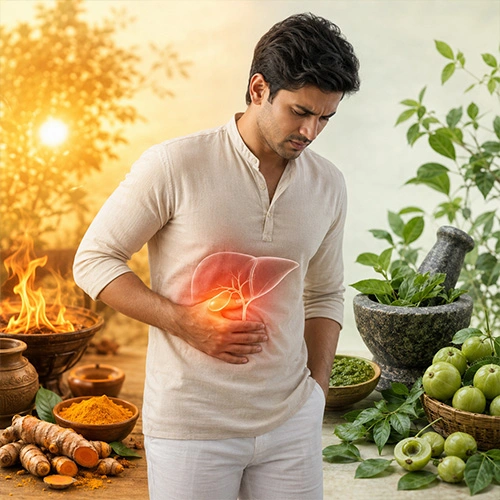
How Gallbladder Stone Ayurvedic Treatment Works: The 5-Step Protocol
Unlike surgery, which removes the gallbladder entirely, Gallbladder Stones Ayurvedic treatment works by addressing root imbalances. Here is the evidence-informed, classical 5-step Ayurvedic approach:
Step 1 — Balance Pitta Dosha & Strengthen Agni
The first priority is to cool excess bile heat and rebuild digestive fire. Uncorrected Pitta means your liver will keep overproducing concentrated bile that crystallizes into new stones.
Key herbs at this stage
- Guduchi (Tinospora cordifolia): Immunomodulatory and Pitta-cooling; supports liver enzyme normalisation. A review in the Journal of Ethnopharmacology highlights its hepatoprotective properties.
- Aloe Vera: Reduces bile acid irritation and soothes the gallbladder lining.
- Triphala: Regulates bowel transit, prevents bile stagnation, and gently detoxifies the liver.
Step 2 — Dissolve Existing Stones with Lithogenic Herbs
Specific Ayurvedic herbs have lithotriptic (stone-dissolving) properties backed by both classical usage and emerging research.
Primary herbs:
- Pashanabheda (Bergenia ligulata): Literally means “stone breaker.” It breaks down calcium-oxalate and cholesterol deposits within bile and urinary pathways.
- Varuna (Crataeva nurvala): Shown in preclinical studies published in the Journal of Ethnopharmacology to inhibit cholesterol crystallization and reduce biliary inflammation.
- Kulattha (Horse Gram): Increases bile solubility and helps pass small stone fragments.
Step 3 — Panchakarma Detoxification of the Liver & Gallbladder
Panchakarma, Ayurveda’s five-action detoxification system, is the cornerstone of gallbladder stone natural treatment. For gallstone patients, three specific therapies are most relevant:
- Virechana (Therapeutic Purgation): The definitive Pitta-eliminating therapy. Medicated purgatives (typically containing Trivrit or Senna) flush excess bile acids, cholesterol metabolites, and Pitta toxins from the liver and intestine. Classical texts consider this the gold-standard Panchakarma treatment for Pittashmari.
- Abhyanga (Medicated Oil Massage): Warm herbalised sesame oil massage loosens deep-seated toxins, reduces gallbladder congestion, and prepares the body for deeper detox.
- Basti (Medicated Enema): Balances Vata and clears the lower digestive tract to ensure smooth elimination of dissolved stone fragments.
Panchakarma must be performed under qualified Ayurvedic supervision. Self-administering purgation therapies without guidance can be harmful.
Step 4 — Dietary & Lifestyle Modifications (Pathya-Apathya)
Diet is not optional in Gallstones Ayurveda — it is therapy. A consistently Pitta-aggravating diet will negate even the best herbal treatment.
Foods to include (Pitta-pacifying)
| Category | Examples |
| Bitter greens | Karela (bitter gourd), methi (fenugreek leaves), spinach |
| Cooling fruits | Pears, apples, pomegranate, coconut water |
| Whole grains | Brown rice, oats, barley |
| Healthy fats | Cow’s ghee (in small amounts), flaxseeds |
| Herbal teas | Coriander-cumin-fennel (CCF) tea, dandelion root tea |
Foods to avoid (Pitta-aggravating)
- Fried, oily, and fast foods (increase cholesterol in bile)
- Red meat and processed meats
- Excess alcohol — as Healthline notes, while moderate alcohol has been associated with slightly lower gallstone risk in some studies, heavy drinking damages the liver and worsens bile metabolism
- Refined sugars and white flour products
- Very spicy foods, excess salt
Hydration: Drink 8–10 glasses of warm water daily. Starting the morning with warm lemon water stimulates bile flow and aids liver detoxification.
Step 5 — Long-Term Maintenance & Prevention
Once stones begin dissolving, prevention of recurrence is critical. Ayurveda achieves this through:
- Maintenance herbs: Daily Triphala Churna with warm water at bedtime; Turmeric-ginger decoctions
- Yoga for bile regulation: Bhujangasana (Cobra Pose) and Dhanurasana (Bow Pose) apply gentle pressure on abdominal organs, stimulating bile flow. Research published in the International Journal of Yoga supports yoga’s role in improving gastrointestinal motility.
- Stress management: Chronic stress raises cortisol, which disrupts bile composition. Pranayama (breath regulation) and meditation lower cortisol and reduce Pitta accumulation.
Top 5 Ayurvedic Herbs for Gallbladder Stones
These are the most clinically relevant herbs in Ayurvedic medicine for gallstones, with evidence supporting their mechanism of action:
1. Pashanabheda (Bergenia ligulata) — The Stone Dissolver
The name translates to “one who splits rocks.” This herb is the most cited in classical texts for gallbladder stone remedy and renal calculi. It contains bergenin and arbutin, compounds that reduce cholesterol saturation in bile and help break down calcified deposits. It is typically prescribed as a decoction (kashayam) or in compound formulas.
2. Varuna (Crataeva nurvala) — The Gallbladder Protector
Varuna is a potent anti-inflammatory, diuretic, and lithotriptic herb. Studies in phytomedicine journals indicate that Varuna bark extract reduces the activity of beta-glucuronidase — an enzyme that contributes to bile pigment stone formation. It also relaxes biliary smooth muscle to ease passage of small stones.
3. Punarnava (Boerhavia diffusa) — The Liver Cleanser
Punarnava literally means “that which renews the body.” It is a powerful Pitta-Kapha pacifier that reduces hepatic inflammation and bile congestion. Research published in PMC/NCBI confirms its hepatoprotective and anti-inflammatory effects, making it a key herb in both Ayurvedic medicine for gallbladder stone and liver disease management.
4. Gokshura (Tribulus terrestris) — The Detoxifier
Widely known for urinary tract health, Gokshura is equally effective for biliary complaints. It promotes urinary and biliary elimination of dissolved stone material, reduces cholesterol crystallisation in bile, and supports Pitta balance. It works synergistically with Punarnava in classical formulations like Punarnavadi Kwath.
5. Kutki (Picrorhiza kurroa) — The Bile Regulator
Kutki is one of Ayurveda’s most powerful cholagogues (bile-flow stimulators). A study in the Journal of Hepatology found Picrorhiza extracts comparable to silymarin (milk thistle) in liver protection. It normalises bile composition, prevents cholesterol stone formation, and is a core ingredient in Arogyavardhini Vati.
Best Ayurvedic Medicines for Gallbladder Stones
Here are the most trusted classical formulations used in Gallbladder Stone Ayurvedic Treatment:
1. Kanchanar Guggulu — The Stone Eliminator
A classical Ayurvedic compound containing Kanchanar bark, Triphala, Trikatu, and Guggulu resin. It has been studied for its anti-inflammatory, lymphatic-clearing, and lipid-reducing properties. A study in the Journal of Ethnopharmacology identified bioactive compounds in Guggulu that regulate cholesterol metabolism — directly relevant to cholesterol gallstone formation.
Primary action: Breaks down stone deposits, clears blocked bile ducts, reduces lymphatic congestion in the hepatic region.
2. Arogyavardhini Vati — The Liver-Gallbladder Tonic
One of Ayurveda’s most comprehensive hepatic tonics. It contains Kutki, Triphala, Shilajit, Guggulu, and purgative herbs. It stimulates Agni, regulates fat metabolism, promotes bile secretion, and detoxifies the liver. It’s considered the Ayurvedic equivalent of a comprehensive liver-gallbladder supplement.
Primary action: Improves bile composition, reduces bile sludge, supports fat digestion.
3. Pashanabhedadi Kashayam — The Stone Breaker Formula
A compound decoction centred on Pashanabheda, often combined with Varuna, Gokshura, and Punarnava. This is the most targeted gallbladder stone remedy in the classical Ayurvedic pharmacopoeia, specifically designed for dissolving urinary and biliary calculi.
Primary action: Directly dissolves small-to-medium gallstones; facilitates passage of stone fragments.
4. Triphala Churna — The Digestive Cleanser
Triphala (Amalaki + Bibhitaki + Haritaki) is Ayurveda’s most universally prescribed formulation. For gallstone patients, its most important actions are: preventing Ama (toxin) accumulation in the gallbladder, regulating bowel transit to eliminate stone fragments, and maintaining Agni through gentle detoxification.
Primary action: Prevents bile stagnation; maintains long-term digestive health.
5. Punarnavadi Kwath — The Anti-Inflammatory Formula
A liquid herbal decoction combining Punarnava, Gokshura, Shunthi (ginger), and other herbs. It reduces gallbladder inflammation, eases biliary pain, enhances bile flow, and supports the body’s natural stone-elimination process.
Primary action: Reduces gallbladder congestion and supports natural flushing of dissolved material.
Important note: All Ayurvedic formulations should be prescribed and supervised by a qualified Ayurvedic physician (BAMS or above). Dosage, combination, and duration depend on individual Prakriti, stone size, and clinical presentation.
Frequently Asked Questions (FAQs)
Yes, for small to medium cholesterol-based gallstones, Ayurvedic medicine for gallbladder stone — particularly herbs like Pashanabheda, Varuna, and formulations like Pashanabhedadi Kashayam — has demonstrated lithotriptic (stone-dissolving) and cholagogue (bile-stimulating) effects in both classical and contemporary clinical practice. Results vary based on stone size, composition, and individual constitution.
Treatment duration depends on stone size and number. Small stones (under 5mm) may respond within 3–6 months of consistent herbal therapy and dietary compliance. Larger stones or multiple stones may require 9–12 months of supervised Gallbladder Stones Ayurvedic treatment, combined with Panchakarma.
There is no single “best” medicine — treatment is always individualised. However, Pashanabhedadi Kashayam, Kanchanar Guggulu, and Arogyavardhini Vati are among the most prescribed classical formulations for Gallbladder Stone Natural Treatment and are consistently used across Ayurvedic clinical practice.
When prescribed and supervised by a qualified Ayurvedic practitioner, these treatments are generally safe. However, some herbs (like Kutki in high doses) may cause loose stools, and Virechana should not be self-administered. Pregnant women, individuals with severe liver disease, or those on blood thinners should disclose all treatments to all treating physicians.
Ayurveda’s long-term approach — Pitta-balancing diet, maintenance herbs, stress management, and regular Panchakarma — significantly reduces the risk of gallstone recurrence. Studies on bile composition suggest that dietary cholesterol management and bile flow maintenance are the two most important long-term prevention factors, both of which are core Ayurvedic strategies.
Yes. Kulattha (Macrotyloma uniflorum / Horse Gram) is traditionally used in Ayurveda for dissolving renal and biliary calculi. It increases bile solubility and diuresis, supporting the flushing of dissolved stone material. It is typically consumed as a thin soup or decoction.