
Varicose Veins Treatment in Ayurveda Siraja Granthi Healed Naturally
Are you suffering from heavy, aching, or visibly twisted veins in your legs? You are far from alone. According to the Indian Vein Congress 2024, approximately 25% of India’s population is affected by varicose veins — a condition that is significantly underdiagnosed across the country.
Modern medicine offers surgery, laser ablation, and sclerotherapy — but these carry risks of recurrence and side effects. Ayurveda, India’s 5,000-year-old healing system, treats varicose veins not as a cosmetic inconvenience but as a deep-rooted vascular imbalance — and has done so since the time of Acharya Sushruta.
What Are Varicose Veins?
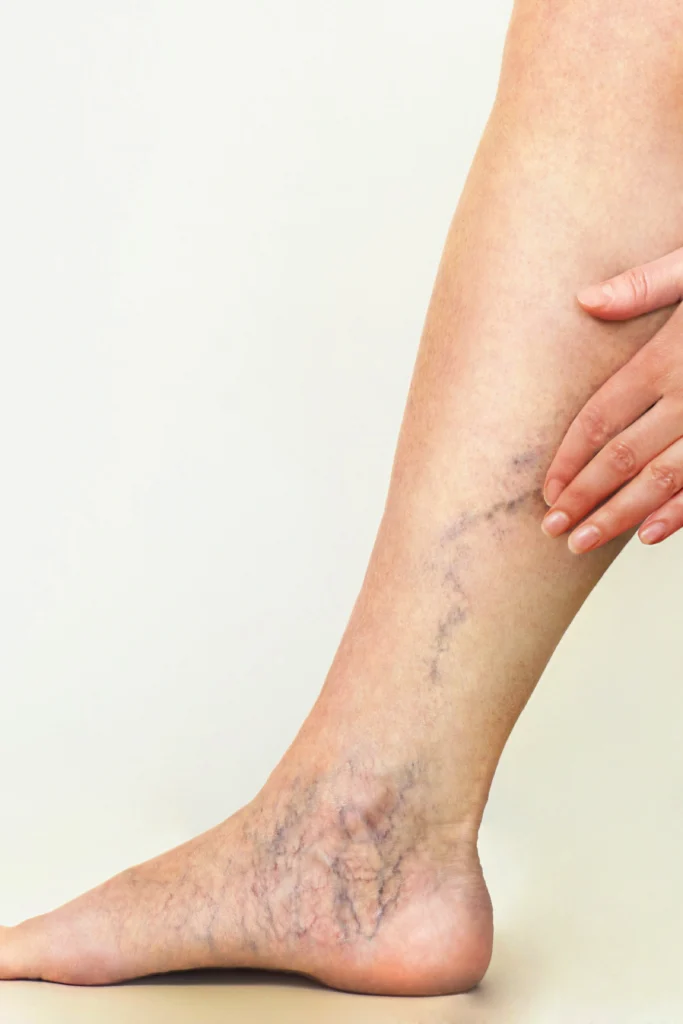
Varicose veins are enlarged, twisted, and rope-like veins — most commonly appearing in the legs and feet — caused by weakened or damaged venous valves that allow blood to pool instead of flowing toward the heart. This increased venous pressure causes the veins to swell, bulge, and become visible under the skin.
- ~25% of India's population suffers from varicose veins (Indian Vein Congress 2024 / Telangana Today, Nov 2024)
- 23% of US adults have varicose veins; rises to 80% of men and 85% of women when spider veins are included (Indian Journal of Surgery, Springer, 2021)
- 2–73% global population affected depending on diagnostic criteria (PMC/NCBI — Alam et al., 2022)
- ~30% of the Indian population over age 40 is affected (Vein Centre / Multiple study citations, 2024)
- 46.7% of Indian females and 27.8% of males were found to have varicose veins in a Northern India study (IJRMS, Agarwal et al., 2016)
What Does Ayurveda Call Varicose Veins?
Ayurveda has described this condition for thousands of years. Ancient Ayurvedic physician Acharya Sushruta named it “Siraja Granthi” (सिराज ग्रंथि) — where Siraja means veins/vessels and Granthi means a knot or swelling.
Published research in the Journal of Ayurveda and Integrated Medical Sciences confirms that the symptomatology of Siraja Granthi closely correlates with varicose veins — specifically the elevated, round, non-pulsating swelling of veins.
Vata Dosha — governs movement and circulation. When Vata is disturbed, vein walls become dry, weak, and lose their elasticity. Blood movement slows down.
Pitta Dosha — governs heat and transformation. When Pitta is aggravated, it creates inflammation, burning, and skin changes around the affected veins.
Both doshas together — along with Rakta (blood) becoming impure — lead to the vein swelling, twisting, and becoming visible under the skin.
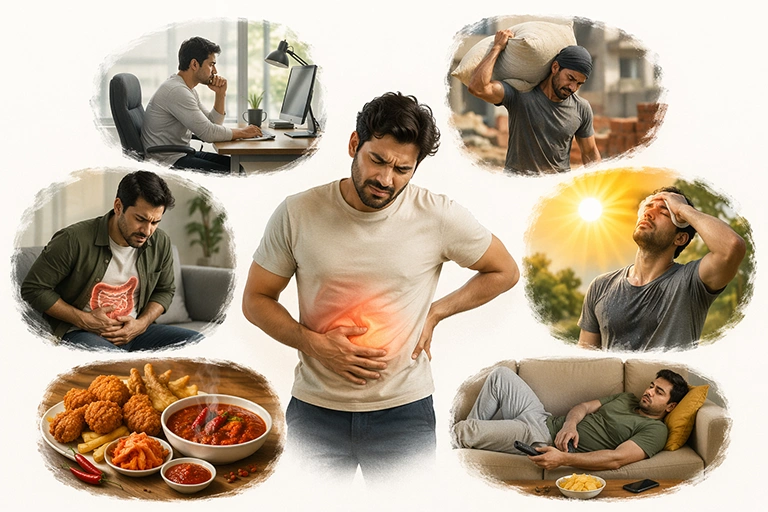
What triggers this imbalance in daily life?
- Standing or sitting in one position for too long
- Heavy physical labor or lifting
- Constipation and poor gut health
- Eating fried, sour, spicy, or heavy foods regularly
- Excessive heat exposure
- Lack of exercise
Varicose Veins Treatment in Ayurveda
- Correcting the dosha imbalance that caused the problem
- Purifying and improving the quality of blood (Rakta Shuddhi)
- Strengthening the vein walls so blood flows properly again
A 2025 clinical study published in JETIR (Journal of Emerging Technologies and Innovative Research) notes that Ayurveda addresses varicose veins by correcting dosha imbalance, purifying vitiated Rakta, improving venous tone, and preventing recurrence — with documented improvements in standardised clinical scores.
The approach combines three streams of treatment:
1. Internal Herbal Medicines (Shamana Chikitsa)
These herbs work from the inside — cleaning the blood, reducing inflammation, strengthening vein walls, and improving circulation. Depending on the patient’s condition and dosha imbalance, commonly used preparations include:
Kaishora Guggulu: A classical Ayurvedic formulation known for blood purification and anti-inflammatory action. Used when there is pain, swelling, and skin changes.
Triphala Guggulu: Supports detoxification and helps strengthen blood vessel walls over time. Also supports healthy digestion, which is important because constipation worsens venous pressure.
Sahacharadi Kashayam: Supports muscle and nerve health in the legs. Used when there is heaviness and fatigue in the limbs.
Chandraprabha Vati: Supports healthy circulation and overall metabolic function.
Note: These are not over-the-counter supplements to self-prescribe. The right combination, dose, and duration depends on individual assessment.
2. Panchakarma and Detox Therapies (Shodhana Chikitsa)
Raktamokshana — Leech Therapy (Jalaukavacharana)
A clinical case published in the Journal of Ayurveda Case Reports (LWW, 2025) reported that four sittings of leech therapy (Jalaukavacharana) along with oral medicines produced remarkable improvement in clinical severity scores (CEAP Score) and pain (VAS), with reduced dilated superficial veins after one month of treatment.
Siravyadha (Therapeutic Bloodletting)
A comparative clinical study in the Journal of Ayurveda and Integrated Medical Sciences (2017) found that Siravyadha treatment produced 93.33% reduction in pain (Shoola) in patients with Siraja Granthi, making it one of the most effective documented Ayurvedic interventions for this condition.
Virechana (Mild Purgation Therapy)
This therapy targets Pitta dosha — addressing the inflammation, heat, and skin changes that accompany varicose veins. It also indirectly helps by relieving constipation, which reduces the upward pressure on leg veins.
Basti (Medicated Enemas)
3. External Applications and Therapies
Abhyanga (Oil Massage) Gentle massage with medicated oils — particularly Sahacharadi Thailam or Mahanarayan oil — in the direction of blood flow (upward, toward the heart) helps reduce stiffness, improve local circulation, and ease the heaviness in the legs.
Lepanam (Herbal Paste) Application of cooling herbal pastes on the affected area to reduce swelling, itching, and skin discolouration locally.
Upanaha Sweda (Herbal Poultice) A warm medicated poultice applied over affected areas to improve tissue nutrition and venous tone.
What to Eat and What to Avoid in Varicose Veins
Diet plays a direct role in dosha balance — and by extension, in how quickly varicose veins improve.
Eat more of:
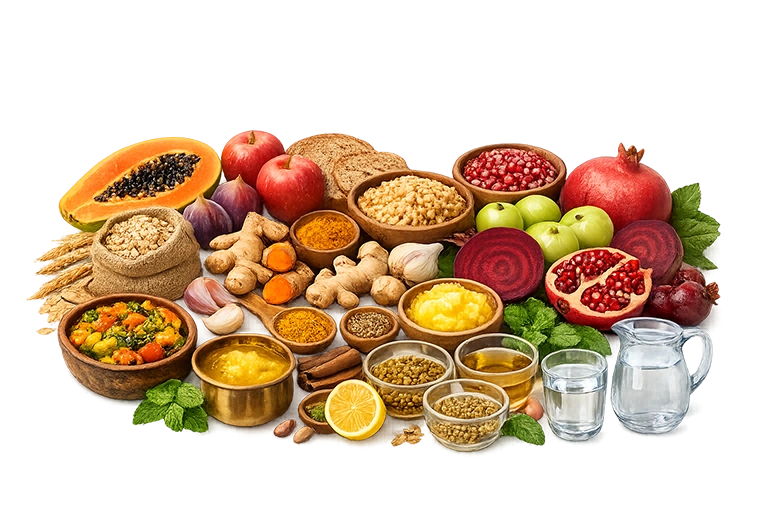
- High-fibre foods: papaya, figs, apples, whole grains (helps prevent constipation)
- Anti-inflammatory foods: turmeric, ginger, garlic
- Foods that support blood quality: amla (Indian gooseberry), beetroot, pomegranate
- Warm, freshly cooked meals made with ghee or sesame oil
- Herbal teas made with coriander, cumin, or fennel
- Adequate water throughout the day
Amla (Vitamin C-rich foods) is particularly important. Vitamin C deficiency is noted as a contributing factor to varicose veins, as it affects the structural integrity of vein walls.
Try to avoid:
- Fried, spicy, very sour, or very salty food
- Curd/lassi (considered channel-blocking in Ayurveda)
- Packaged snacks, aerated drinks, processed foods
- Excessive caffeine or alcohol
- Heavy non-vegetarian food eaten frequently

Common Symptoms of Varicose Veins
- Visible, bluish-purple, rope-like, twisted veins — especially on calves and thighs
- Heaviness, aching, or burning sensation in the legs (worse after prolonged standing)
- Swelling of feet and ankles
- Skin discolouration, dryness, or eczema near affected veins
- Itching or tingling over the veins
- Night cramps and restless legs
- In severe/chronic cases: venous ulcers (open sores that are slow to heal)
If left untreated, chronic venous insufficiency can progress to serious complications including thrombophlebitis, external hemorrhage, lipodermatosclerosis, and persistent skin ulceration.
Frequently Asked Questions (FAQs)
Ayurveda can significantly reduce symptoms — pain, swelling, heaviness, and skin changes — and prevent the condition from worsening. Once vein valves are damaged, no system of medicine (Ayurvedic or modern) can regenerate them. However, Ayurvedic treatment strengthens remaining vein function and the body’s compensatory mechanisms, often allowing people to avoid surgery and live without significant discomfort.
Mild cases typically show noticeable improvement within 2–4 weeks. Moderate to severe or long-standing cases may require 2–3 months of consistent treatment. The timeline depends on age, severity, lifestyle compliance, and individual response.
No. Leeches produce a natural anesthetic in their saliva. Most patients describe the sensation as a mild pressure, nothing more. Sessions are done in a clinical setting under supervision.
In most cases, yes — but this should always be discussed with your treating physician. If you are on blood thinners or have undergone vascular procedures, your doctor needs to know before starting Ayurvedic therapies like Raktamokshana.
Yes — several self-care practices are safe to begin at home without a prescription: leg elevation, yoga postures (especially Viparita Karani), dietary changes, gentle warm oil massage, staying hydrated, and reducing long periods of standing or sitting. These don’t replace treatment but support it meaningfully.
Ayurvedic classical texts specifically address chronic and ulcerated cases. Panchakarma therapies — particularly leech therapy and Virechana — have been used for ulcerated varicose veins with documented results. These cases require in-person clinical assessment and should not be managed with home remedies alone.
Siraja Granthi is the Ayurvedic name for varicose veins. Siraja refers to veins or vessels, and Granthi means a knot or swelling. Ancient physician Acharya Sushruta described this condition in detail in the Sushruta Samhita, one of the foundational texts of Ayurvedic surgery.
Patient Testimonials
Trustindex verifies that the original source of the review is Google. Sr muje bhi hath aur sarpar Puri khujali aa rahi hePosted on GoogleTrustindex verifies that the original source of the review is Google. Dosto kolon therepi bahut achhi therepi mese aek he muje pet ki roblem thi to mene yah kolon therepi karva ke meri problem sol ki he aap bhi karake apni problem sol kare bahut hi achhi tarah se samjate he koe therepi karte he... Niramay aayurvedik panchkaram sentar amroli...Posted on GoogleTrustindex verifies that the original source of the review is Google. Aacha lagaPosted on GoogleTrustindex verifies that the original source of the review is Google. First ,I want to thanks to your team to given Great opportunity to me to connect with you , It was a very usefull and informative session conducted by the Dr Yogesh ji....it will help to recover my health 🙏Posted on GoogleTrustindex verifies that the original source of the review is Google. Me up se aaya hu surat mene niramay aayurvedik...amroli... me kolon therepi kyai he bahut hi achhi he sabko karni chahiye.Posted on Google