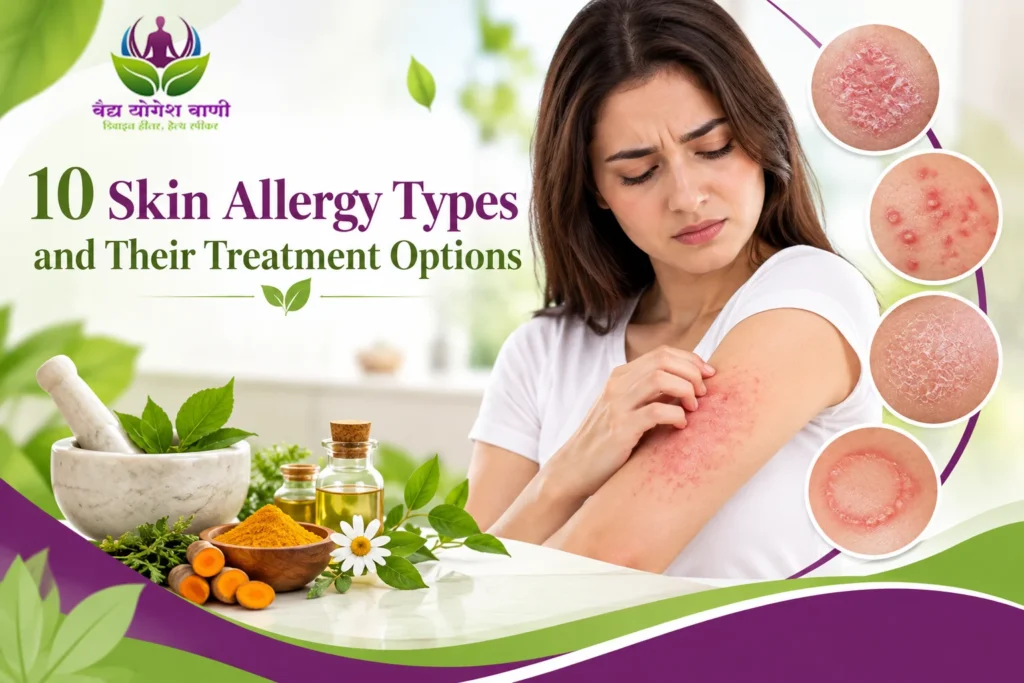
Every year, thousands of Indians suffer from skin allergies without even knowing what is causing them. A small rash today can turn into a serious skin condition tomorrow if ignored. According to a research study, approximately 20% to 30% of the Indian population is affected by allergies – and skin allergies are among the most common ones rising every year.
Knowing about various skin allergy types is the very first and most crucial step towards having the appropriate treatment, especially when symptoms keep returning and you may need guidance from an Allergy Specialist. In this blog, we shall provide information about all the 10 major types of skin allergy along with treatment options in a manner that is as simple as it can be – so that you understand precisely what is going on with your skin! Let’s begin!
1. Allergic Contact Dermatitis
This happens when your skin directly touches something it is allergic to – like certain soaps, metals, cosmetics, or plants. The affected area becomes red, itchy, and inflamed within hours of contact. It is one of the most reported allergy types on skin seen across all age groups in India.
Treatment: Avoid the trigger substance immediately. Use soothing Ayurvedic herbal creams or prescribed antihistamine creams to reduce redness and itching.
2. Hives (Urticaria)
Hives are raised, red, and extremely itchy welts that appear suddenly anywhere on the body. They can be triggered by food, medicine, stress, heat, or insect bites. They may change shape, spread, or disappear and reappear within hours – making them one of the most confusing skin allergy types for people to identify on their own.
Treatment: Antihistamines help reduce itching quickly. Ayurvedic cooling herbs like Neem and Chandana also provide natural and effective relief from hives.
3. Angioedema
Angioedema is a deeper form of swelling that occurs just beneath the surface of the skin. It commonly affects the eyes, lips, throat, and hands. It can appear alongside hives and in severe cases may cause breathing difficulty – which requires immediate emergency medical attention without any delay.
Treatment: Severe cases need emergency medical treatment immediately. Mild cases can be managed with antihistamines and cooling Ayurvedic formulations under proper doctor guidance.
4. Atopic Dermatitis (Atopic Eczema)
This is a long-term skin allergy type that causes dry, itchy, and inflamed skin. It mostly begins in childhood and often continues into adulthood. It is commonly triggered by dust, pollen, sweat, or certain fabrics. People with eczema have very sensitive skin that flares up frequently with changing seasons or stress.
Treatment: Keep skin well moisturised every day. Ayurvedic treatments like Panchakarma detox and medicated herbal oils may help manage eczema naturally from the root cause when recommended by an Ayurvedic Doctor.
5. Contact Urticaria
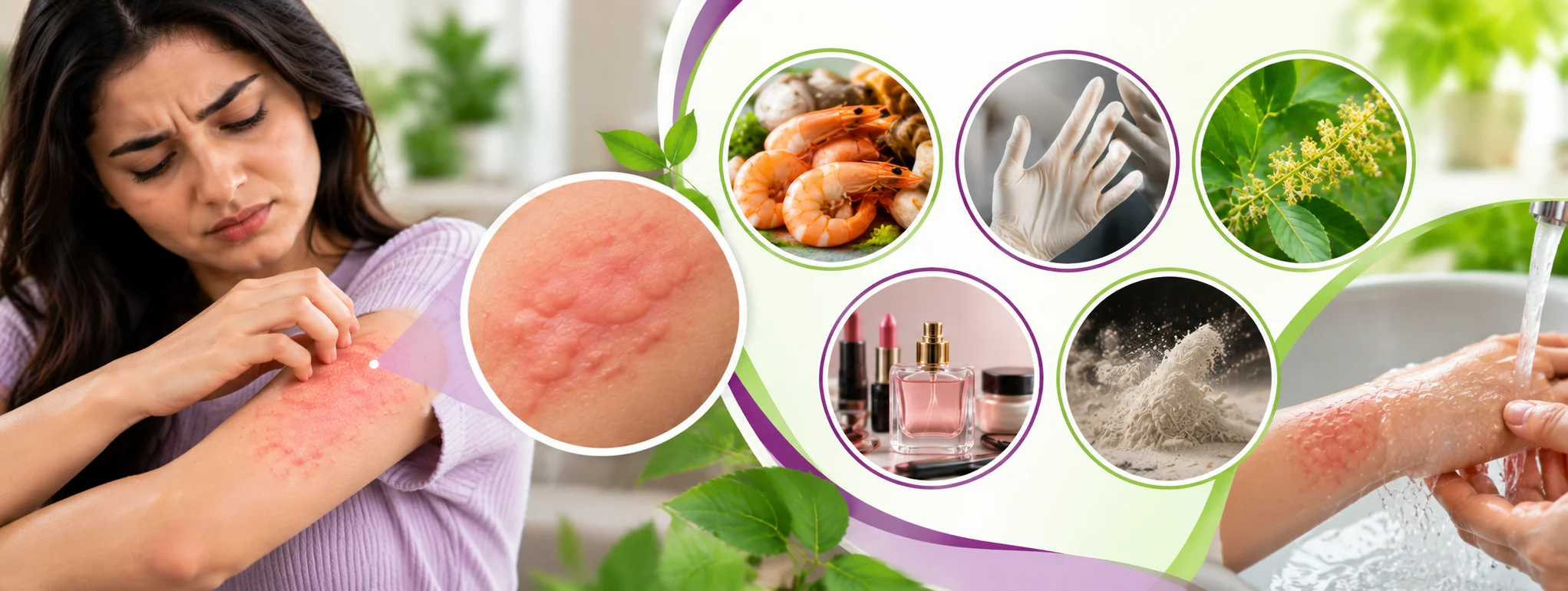
Contact Urticaria is an immediate skin reaction that occurs within minutes of touching a trigger substance. Unlike regular hives, this reaction stays only on the area of direct contact. Common triggers include raw foods, latex, certain plants, fragrances, and some cosmetic products used daily.
Treatment: Remove contact with the trigger immediately. Rinse with cool water to reduce the reaction. Consult a doctor if symptoms start spreading beyond the original contact area.
6. Drug-Related Allergic Skin Reactions
Some people develop skin allergy types after taking certain medicines like antibiotics, painkillers, or blood pressure medications. The reaction can appear as rashes, hives, or red patches anywhere on the body. It usually appears within hours or a few days of starting a new medicine prescribed by a doctor.
Treatment: Stop the suspected medicine only under proper doctor supervision. Never stop any prescribed medicine on your own without consulting your doctor first under any circumstances.
7. Food-Related Allergic Skin Reactions
Certain foods like milk, eggs, peanuts, seafood, or wheat can trigger types of skin allergic reactions in sensitive individuals. Symptoms include hives, redness, itching, or swelling appearing shortly after eating the trigger food. Food-related allergy types on skin are very commonly seen among children across India.
Treatment: Identify and strictly avoid trigger foods from your daily diet. Ayurvedic gut detox treatments help reduce food sensitivity naturally and effectively over time with consistent care.
8. Photoallergic Contact Dermatitis
This skin allergy type occurs when certain substances on your skin – like sunscreen, perfume, or certain medicines – react with sunlight and cause an allergic reaction. It is completely different from regular sunburn. The rash usually appears only on sun-exposed areas like face, neck, and hands.
Treatment: Avoid sun exposure and the triggering product completely. Use natural Ayurvedic sun protection remedies and wear full-sleeve clothing when stepping outside during daytime hours.
9. Latex Allergy
Latex allergy is a reaction to natural rubber latex found in gloves, balloons, condoms, and certain medical equipment. It is commonly seen in healthcare workers and people who undergo frequent medical procedures. Symptoms range from mild skin itching and redness to severe whole-body allergic reactions in sensitive individuals.
Treatment: Strictly avoid all latex-containing products in daily life. Always inform your doctor about your latex allergy before any medical procedure or surgery to ensure complete safety.
10. Insect-Bite and Insect-Sting Allergic Reactions
Bee stings, wasp stings, and mosquito bites can trigger allergic skin reactions in sensitive people. While most reactions are mild – causing only redness and local swelling – some people can develop severe whole-body reactions. These severe reactions need immediate emergency medical treatment and should never be ignored or delayed.
Treatment: Apply cold compress immediately on the affected area. Seek emergency medical help right away if swelling spreads rapidly or breathing becomes difficult after a sting.
When Should You See a Doctor for a Skin Allergy?
Not every skin allergy needs a doctor visit – but some situations absolutely do. According to the India Skin Study published on NCBI 2024, allergic skin diseases accounted for 10.2% of all skin disease cases seen in dermatology clinics across India. See a doctor immediately if your allergy types on skin cause severe swelling, difficulty breathing, or spread rapidly across your body without stopping.