You drop your keys for the third time this week, and you tell yourself you are just tired. Most of us would do the same. But when a weak grip, a tripping foot or a muscle that keeps twitching refuses to go away, it may be one of the early symptoms of motor neuron disease.
Motor neuron disease symptoms start so quietly that people ignore them for months. This blog explains what to watch for, how the signs look in daily life, and when it is time to see a doctor. Read on, because catching them early matters. Let’s get started!
What is Motor Neuron Disease?
Motor neuron disease (MND) is a condition that slowly damages the nerve cells that control your muscles. These nerves carry signals from the brain to the muscles you use to move, speak, swallow and breathe. Without them, muscles weaken. There are a few types:
- ALS (amyotrophic lateral sclerosis): the most common type, affecting upper and lower motor neurons
- PLS (primary lateral sclerosis): affects only upper motor neurons
- PBP (progressive bulbar palsy): affects speech and swallowing muscles
- SMA (spinal muscular atrophy): mostly genetic, can affect children and adults
Most motor neuron disease symptoms and early signs of ALS look alike at the start.
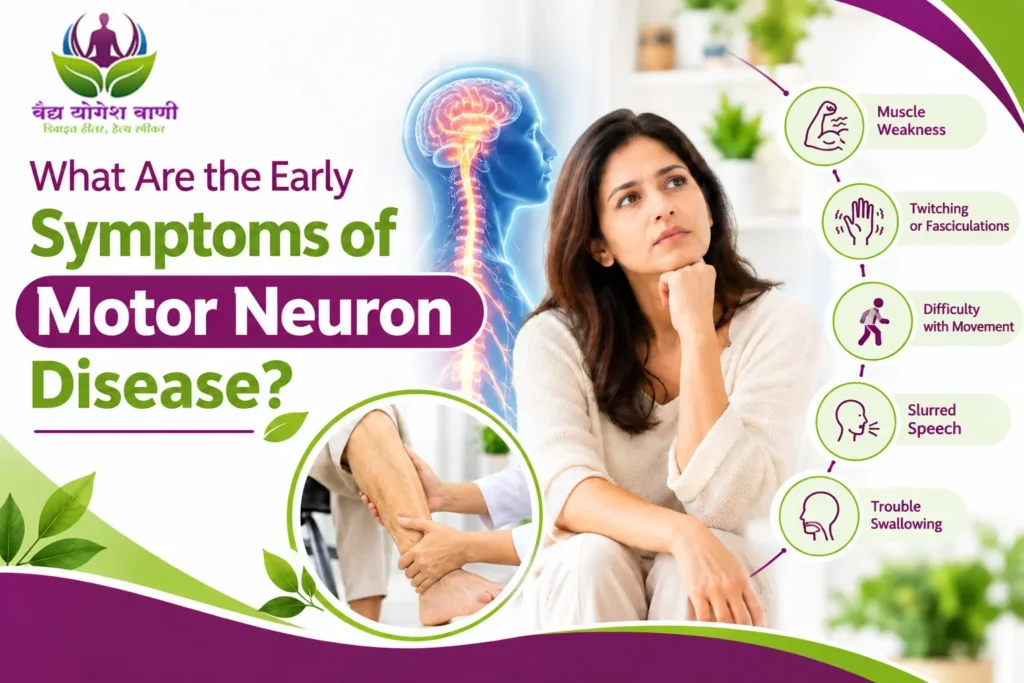
Top 5 Early Symptoms of Motor Neuron Disease You Should Know
Every person is different, but these are the most common signs of motor neuron disease at the start. Look at them one by one and notice if any feels familiar.
1. Muscle Weakness (Limb or Grip)
This is usually the first thing people notice. Weakness often begins in one hand or one leg, not both. Everyday tasks start feeling harder.
- Dropping cups or keys
- Trouble opening jars or turning a key
- Difficulty buttoning a shirt
- Arm feeling heavy while lifting
Over weeks, the weak muscle may also look thinner. Rest does not fix it, which is the main difference from normal tiredness. It is easy to blame age or overwork, so many people wait too long.
2. Foot Drop and Tripping
Foot drop means you cannot lift the front part of your foot properly. The toes drag on the ground, and you start tripping on flat floors or stairs.
- Foot slapping the ground while walking
- Tripping over carpet edges or small steps
- Lifting the knee higher to avoid dragging
- Ankle feeling weak or loose
It usually begins in one leg. Many people think it is a back problem or an old injury and go to the wrong doctor first and lose time.
3. Muscle Cramps and Stiffness (Spasticity)
Cramps in the calves, thighs or hands that come often and without any reason are an early sign. Some people also feel stiffness, called spasticity, where muscles feel tight and hard to move.
- Cramps even when you are resting
- Legs feeling stiff or heavy while walking
- Jerky or slow movements
- Tightness that does not ease with stretching
Normal cramps usually follow exercise or dehydration. But these keep coming back without any clear cause.
4. Involuntary Muscle Twitching (Fasciculations)
Fasciculations are small, quick twitches under the skin. You may see a muscle flicker in your arm, thigh, calf or tongue even when you are not moving it.
- Twitching that appears in many places
- Twitching along with weakness
- Twitches that last for weeks
Occasional twitching after coffee, stress or lack of sleep is very common and harmless. It becomes a concern mostly when weakness or muscle thinning comes along with it. So do not panic over one twitching eyelid.
5. Slurred Speech or Swallowing Difficulties (Bulbar Onset)
When the nerves that control the mouth and throat are affected first, doctors call it bulbar onset. Speech changes slowly, and people around you often notice before you do.
- Slurred or nasal-sounding speech
- Coughing or choking while eating or drinking
- Needing to clear your throat often
- Excess saliva or drooling
- Tiring quickly while talking
Food may feel stuck, and meals can take much longer than before. Do not ignore these, especially if they come with weakness in the limbs. These motor neuron disease symptoms rarely arrive together. If even one keeps worsening for weeks, get it properly checked soon.
Can Early Detection Help Manage Motor Neuron Disease?

Yes, it can. Although there is no established cure for motor neuron disease, early diagnosis helps doctors plan appropriate care, including physiotherapy, speech therapy and nutritional support.
Patients may also explore ayurvedic treatment for motor neuron disease for supportive care under the guidance of a qualified practitioner, alongside neurologist-recommended treatment. This helps people stay independent and comfortable for longer.
Are Early Symptoms of MND Different in Men and Women?
The main signs of motor neuron disease are the same in men and women. The difference is mostly where it starts. Men tend to notice weakness in the arms or legs first, while women tend to notice speech and swallowing changes first. Both are early signs of ALS, and anyone can have either.
When Should You See a Doctor?
See a neurologist if you notice any of these for more than a few weeks:
- Weakness that keeps getting worse
- Twitching with muscle thinning
- Slurred speech or choking on food
Do not wait for all the signs of motor neuron disease to appear.