Quick Answer: High blood pressure means your blood is pushing too hard against your artery walls. Over time this damages your heart, brain, kidneys and eyes – and can lead to heart attack or stroke if left untreated.
You checked your blood pressure and the numbers were higher than normal. Maybe your doctor mentioned it during a routine checkup. Maybe you felt a sudden headache or dizziness and got worried. Whatever brought you here – you are right to take it seriously.
High blood pressure is one of those health problems that shows no obvious warning signs for years. It quietly damages your heart, kidneys, brain and blood vessels from the inside. In India alone, over 220 million people are living with high blood pressure – and many of them have no idea. This blog will help you understand exactly what happens to your body, what causes it, and most importantly – what you should do about it. Let’s get started.
What Is High Blood Pressure?
Blood pressure is the force your blood puts on the walls of your arteries as your heart pumps it through your body. It is measured in two numbers – systolic pressure on top and diastolic pressure on the bottom. A normal reading is around 120/80 mmHg.
Blood pressure readings of 130/80 mmHg or higher fall into the high blood pressure range under current American Heart Association/American College of Cardiology guidelines. However, one high reading does not necessarily mean you have hypertension. A healthcare professional should evaluate repeated readings and your overall health to confirm a diagnosis.
Think of it like a water pipe. If the water pressure inside is too high for too long, the pipe starts to crack and weaken. The same thing happens inside your body. Your arteries, heart and organs slowly start getting damaged – often without any pain or warning signs.
According to the World Health Organization, hypertension is a leading cause of premature death worldwide and affects more than 1.4 billion adults globally.
What Happens to Your Body When Blood Pressure Is High?
Most people think high blood pressure only affects the heart. But the truth is – it silently damages multiple organs at the same time. Here is what is actually happening inside your body when your blood pressure stays high for a long time.
Your Heart Works Harder
When blood pressure is high, your heart has to pump with much more force than normal. Over time this extra workload causes the heart muscle to thicken and become stiff. A thickened heart does not pump blood efficiently.
This increases your risk of heart failure, chest pain and irregular heartbeat. Many people who suffer a heart attack had uncontrolled high blood pressure for years without knowing it. Your heart is working overtime every single day – and eventually it gets exhausted.Your Blood Vessels Can Become Damaged
Healthy blood vessels are flexible and smooth on the inside. But when blood pressure stays high, the constant force damages the inner lining of your arteries. This damage makes it easier for fat and cholesterol to build up – forming hard plaques.
Over time your arteries become narrow, stiff and blocked. This condition is called atherosclerosis. Blocked arteries reduce blood flow to your heart and brain – dramatically increasing your risk of heart attack and stroke. Once this damage starts, it is very difficult to reverse completely.Your Brain Can Be Affected
Your brain needs a constant supply of fresh blood to function properly. High blood pressure weakens and narrows the tiny blood vessels that supply your brain. This can cause two serious problems. First – a blood vessel can burst inside the brain causing a hemorrhagic stroke. Second – a clot can block blood flow to the brain causing an ischemic stroke.
Both are life threatening emergencies. Long term high blood pressure can also reduce blood flow gradually – leading to memory problems, difficulty concentrating and even dementia in older age.Your Kidneys May Be Damaged
Your kidneys filter your blood and remove waste from your body every single minute of the day. They have thousands of tiny blood vessels inside them that do this work. High blood pressure damages these small vessels over time – reducing the kidneys’ ability to filter blood properly. When kidneys cannot work efficiently, waste and fluid build up in your body.
This can eventually lead to chronic kidney disease or complete kidney failure – requiring dialysis. High blood pressure and kidney disease also worsen each other in a dangerous cycle.Your Eyes Can Be Affected
Your eyes have very small and delicate blood vessels that are extremely sensitive to pressure changes. When blood pressure stays high for a long time, these tiny vessels can thicken, narrow or even burst. This condition is called hypertensive retinopathy.
It can cause blurred vision, double vision or in severe cases – permanent vision loss. Many patients discover they have high blood pressure only after visiting an eye doctor for vision problems. Your eyes are often the first place where blood pressure damage becomes visible during a routine eye examination.What Are the Symptoms of High Blood Pressure?
High blood pressure is often called the “silent killer” – and for a very good reason. Most people have no noticeable symptoms even when their blood pressure is elevated. The only reliable way to know whether your blood pressure is high is to measure it. However, when blood pressure becomes extremely high, some warning symptoms can appear.
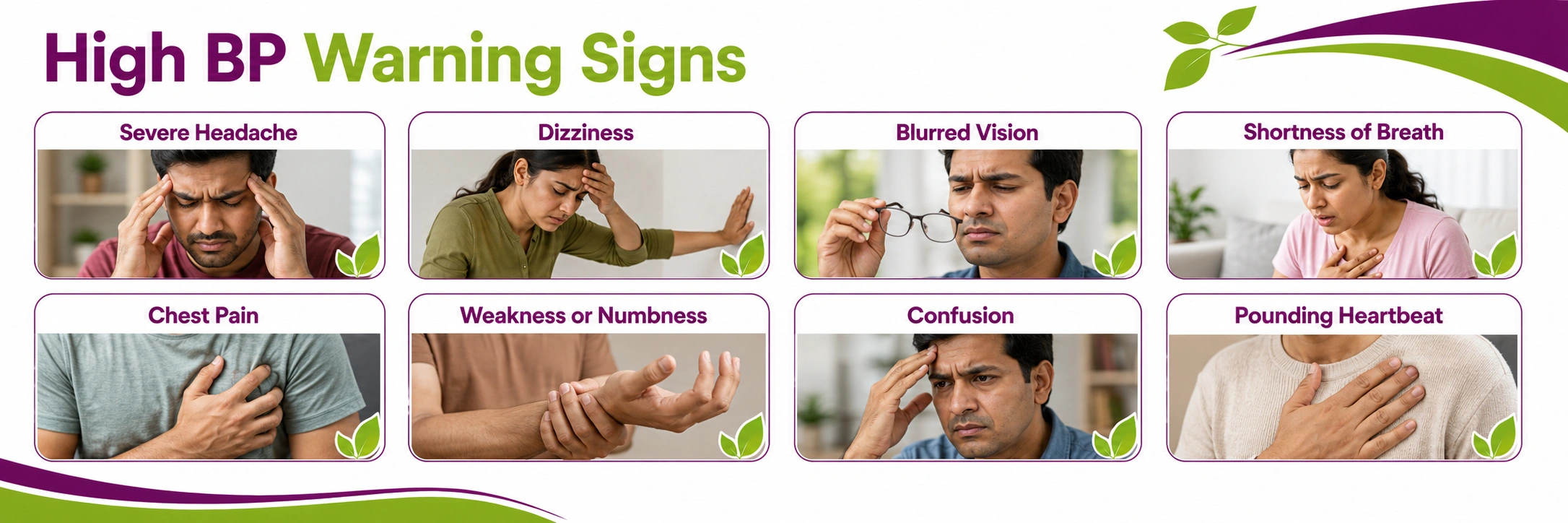
Watch out for these warning signs –
- Severe headache, especially if it is sudden or unusually intense
- Dizziness or feeling lightheaded
- Blurred or changing vision
- Shortness of breath
- Chest pain or pressure
- Weakness or numbness
- Confusion or difficulty speaking
- Irregular or pounding heartbeat
These symptoms can have many different causes and do not necessarily mean you have high blood pressure. However, if they occur with a very high blood pressure reading, seek medical attention promptly.
What Causes High Blood Pressure?
High blood pressure does not happen overnight. It develops slowly over months and years due to a combination of lifestyle habits, genetics and underlying health conditions. Here are the most common causes –
- Unhealthy Diet – Eating too much salt, processed food and oily food raises blood pressure directly. Salt causes your body to retain water – increasing the volume of blood in your arteries and pushing pressure up.
- Physical Inactivity – When you do not move your body regularly, your heart becomes weaker and less efficient. A weak heart has to pump harder to circulate blood – which gradually raises your blood pressure over time.
- Being Overweight or Having Obesity – Extra body weight means your heart has to supply blood to more tissue. This extra demand forces your heart to work harder – and blood pressure rises as a result of carrying that extra load.
- Tobacco Use – Every cigarette you smoke causes an immediate spike in blood pressure. The chemicals in tobacco also damage your artery walls over time – making them narrow and stiff and permanently raising your baseline pressure.
- Excessive Alcohol Consumption – Drinking heavily on a regular basis raises blood pressure significantly. Alcohol also interferes with blood pressure medications – making them less effective even when you are taking them regularly.
- Family History and Age – If your parents or close relatives had high blood pressure, your risk is much higher. As you age, your blood vessels naturally become stiffer – which is why BP tends to rise after the age of 40 in most people.
- Certain Medical Conditions – Thyroid disorders, kidney disease, diabetes and sleep apnea can all directly cause or worsen high blood pressure. Treating the underlying condition often helps bring blood pressure back to normal range.
- Stress and Other Factors – Chronic stress triggers your body to release hormones that temporarily raise blood pressure. When stress never goes away, these hormones keep your BP elevated constantly – causing long term damage to your arteries and heart.
What Are the Risk Factors for High Blood Pressure?
Some people are at a much higher risk of developing high blood pressure than others. Knowing your risk factors helps you take action before serious damage begins.
Here are the key risk factors to know –
- Age above 40 – Blood vessels naturally stiffen with age. Men above 45 and women above 55 are at significantly higher risk of developing hypertension over time.
- Family history – Having a parent or sibling with high blood pressure doubles your own risk. Genetics plays a strong role in how your blood vessels respond to pressure changes.
- Sedentary lifestyle – People who sit for long hours and rarely exercise have weaker cardiovascular systems. Their hearts have to work harder to pump blood – gradually pushing pressure higher.
- High salt diet – Indians traditionally consume much more salt than recommended. Excess sodium causes fluid retention – directly increasing the volume and pressure of blood in your arteries.
- Chronic stress – Long term emotional stress – from work, relationships or financial pressure – keeps stress hormones elevated. These hormones constantly constrict blood vessels and raise blood pressure.
- Diabetes – High blood sugar damages artery walls over time – making them stiff and narrow. This is why most diabetic patients eventually develop high blood pressure as a secondary condition.
- Obesity – Carrying excess weight puts enormous strain on your heart and blood vessels. Even losing 5 to 10 kg can make a meaningful difference in your blood pressure readings.
If you have two or more of these risk factors – regular blood pressure monitoring is absolutely essential for your long term health.
Is High Blood Pressure Dangerous?
Yes – very much so. And the danger is not just one specific problem. Uncontrolled high blood pressure is one of the leading causes of heart attack, stroke and kidney failure in India. According to the American Heart Association, high blood pressure is responsible for more cardiovascular deaths than almost any other risk factor.
What makes it especially dangerous is that most people feel perfectly fine – right until the moment something serious happens. Silent damage happening inside your body for years is far more dangerous than pain you can feel and act on immediately.When Should You See a Doctor?
Do not wait for a crisis. See a healthcare professional if your blood pressure readings are repeatedly above the recommended range – even if you feel fine. If your reading is above 180/120 mmHg, wait at least one minute and measure it again. If it remains this high, contact a healthcare professional immediately.
If you also experience chest pain, shortness of breath, weakness or numbness, vision changes or difficulty speaking, seek emergency medical care immediately. If you are looking for guidance from a Blood pressure specialist doctor, it is important to choose a healthcare professional who can evaluate your readings, risk factors and overall health.For those also interested in an Ayurvedic and holistic approach that can complement healthy lifestyle habits, Dr. Yogesh Vani provides personalised guidance through Ayurveda, dietary guidance and lifestyle modification.Ayurvedic care should be considered alongside appropriate medical care, especially if you have been diagnosed with high blood pressure or are already taking prescribed medication.
What Should You Do If Your Blood Pressure Is High?
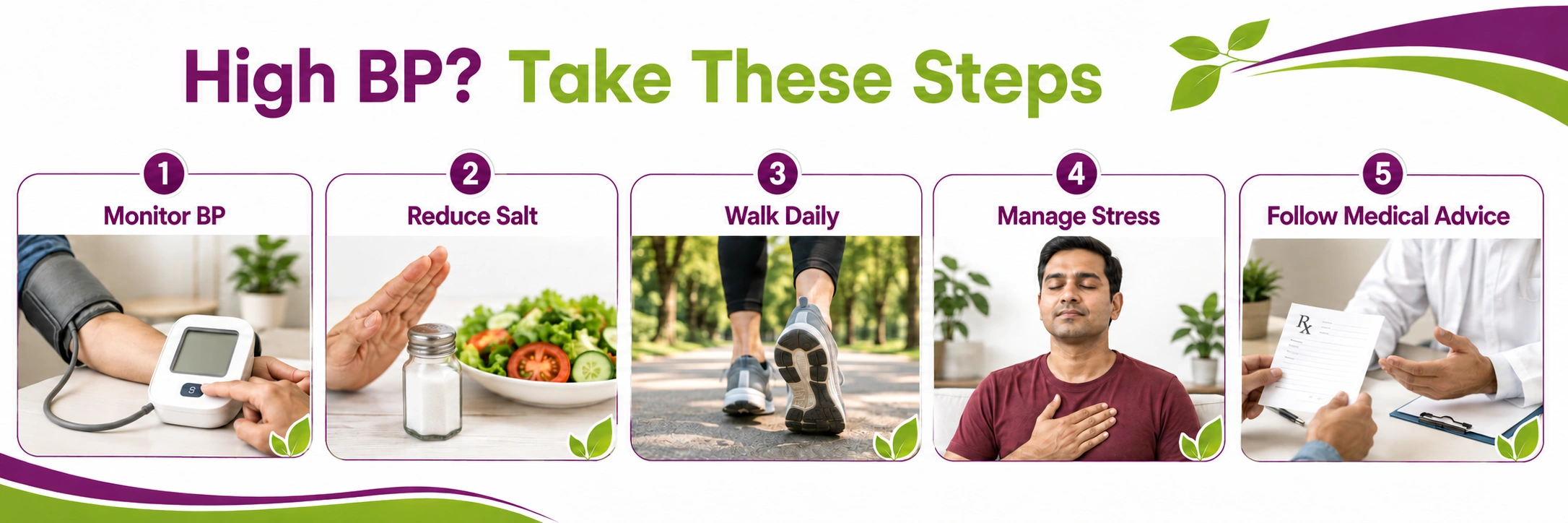
Finding out your blood pressure is high can feel scary – but the good news is it is very manageable with the right steps.
- Monitor it regularly – Check your BP at home every day at the same time. Keeping a record helps your doctor understand your pattern clearly.
- Reduce salt in your diet – Cut down on packaged food, pickles and extra salt. Even small reductions make a real difference within weeks.
- Move your body daily – Even 30 minutes of brisk walking every day can meaningfully lower your blood pressure over time.
- Manage your stress – Practising Stress Management Techniques such as yoga, meditation and deep breathing can help you relax and support healthier blood pressure management over time.
- Follow your doctor’s advice – Whether it is medication or lifestyle changes – consistency is everything with blood pressure management.
Conclusion
High blood pressure is not something you should ignore or push aside for later. It works silently – damaging your heart, brain, kidneys and eyes for years without giving you any obvious warning. By the time most people take it seriously, the damage has already begun. But here is the hopeful part – with the right awareness, lifestyle changes and expert guidance, high blood pressure is absolutely manageable.
If you have been ignoring high BP readings or looking for a natural way to manage it without depending entirely on medications – consider exploring Ayurvedic treatment. At Niramay Swasthyam Ayurvedic Clinic, Dr. Yogesh Vani has helped hundreds of patients in Surat and across Gujarat manage blood pressure naturally through personalised herbal treatment, dietary guidance and holistic lifestyle correction. Your health deserves that attention – starting today.