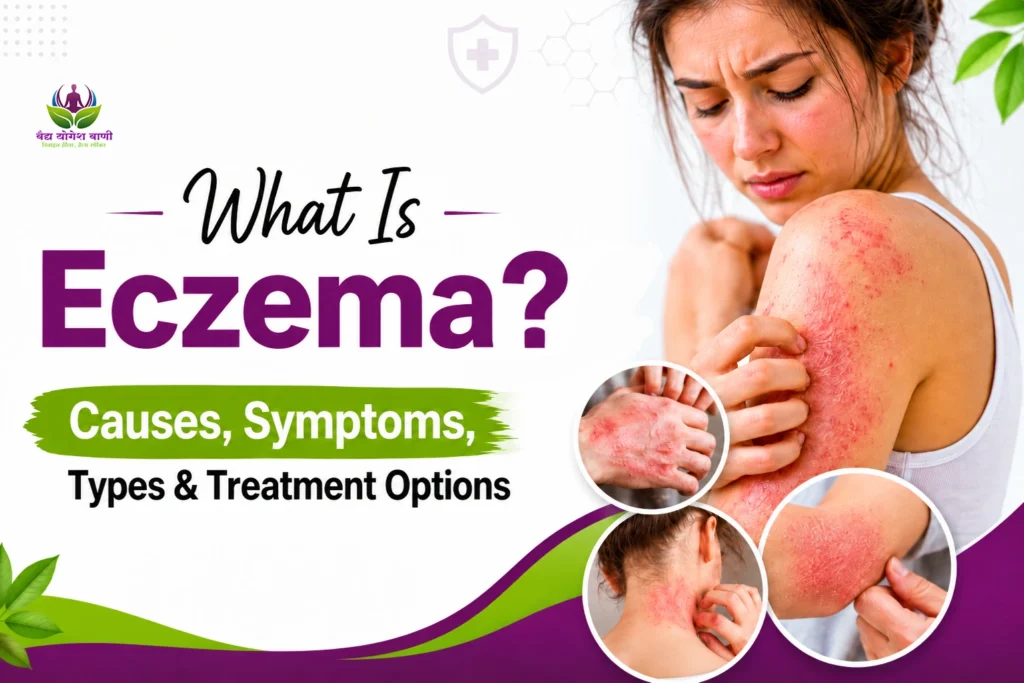
Eczema Treatment helps manage dry, itchy, inflamed skin by identifying causes, symptoms, triggers, and the right treatment options.
Eczema is kind of a common skin problem that can affect babies children, and adults. According to National Eczema Association eczema affects approximately 10% to 20% of children and 2% to 10% of adults worldwide.
It usually brings dryness, that pesky itching, redness, irritation, rough patches and sometimes skin that looks split or swollen. For a lot of people, the symptoms don’t just stay put, they show up then calm down in the form of flare-ups, like it can be on and off.
Getting the right eczema treatment really depends on which eczema type it is, and consulting an experienced eczema treatment doctor can help determine the most effective treatment plan. how severe it gets, the person age, the state of the skin, what part of the body is involved, and even the own personal triggers.
Eczema might not be something you can always “cure” forever but with good skin care, keeping an eye on triggers, and a plan guided by a dermatologist, people can better manage symptoms and also lower how often flare-ups happen.
In this blog, we will understand eczema causes, common symptoms, types, triggers, home care tips, and the best eczema treatment options available.
What Is Eczema?
Eczema is kind of a skin condition where inflammation shows up, plus dryness, itching, and that annoying irritation. It tends to appear when the skin barrier gets weak , like it doesn’t hold onto moisture as well. Once the barrier is damaged the skin becomes way more sensitive to irritants, allergens, sudden weather shifts, and even infections.
And eczema isn’t only one single thing. it’s more like a collection of skin problems that may look similar at first, but inside they can have different causes and triggers.
According to global report on Eczema 2024 the most common variety is atopic dermatitis, which is often noticed in children but it can also show up in adults.
6 Common Types of Eczema You Should Know About
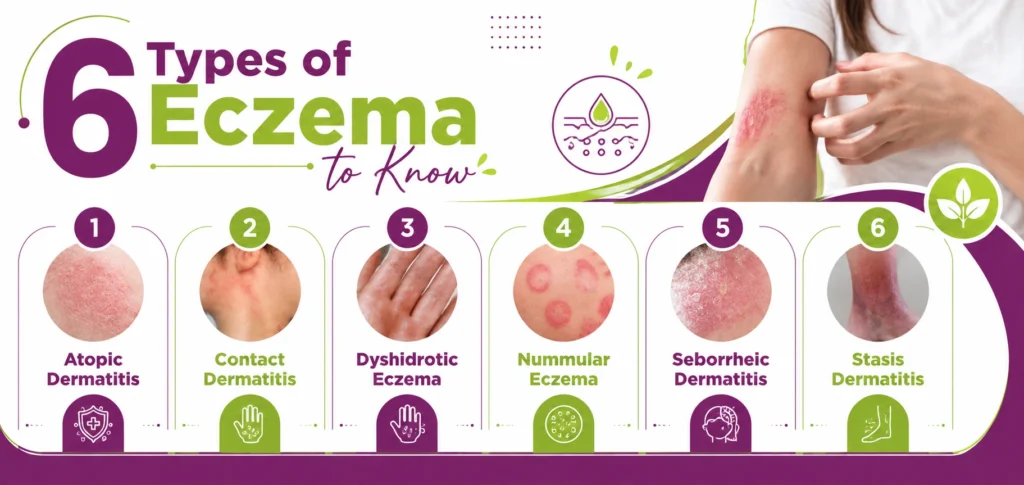
Various forms of eczema affect different body parts. Knowing the type determines the appropriate eczema treatment.
1. Atopic Dermatitis
Atopic dermatitis ranks among the leading types of eczema. It generally makes the skin dry, itchy, inflamed, and sensitive. It also runs in families where there is a history of allergies, asthma, or hay fever.
2. Contact Dermatitis
Contact dermatitis is a skin allergy that develops when the skin comes into contact with an irritant or allergen. The common irritants may be harsh soaps, detergents, fragrances, metals, chemicals, or some types of cosmetics or skin care products.
3. Dyshidrotic Eczema
Dyshidrotic eczema is characterized by the formation of tiny itchy blisters often on the hands, fingers, feet, or toes. It may get worse if you sweat, are stressed, or come into contact with irritants.
4. Nummular Eczema
Nummular eczema is a type of eczema that produces round or coin-shaped lesions on the skin. These skin lesions can be itchy, dry, and scaly or irritated.
5. Seborrheic Dermatitis
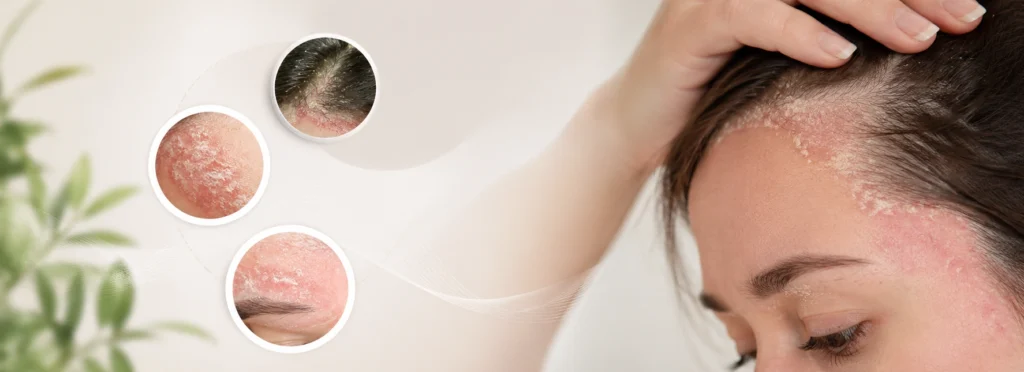
Seborrheic dermatitis is a type of eczema which commonly affects the quite oily areas on the scalp, face, eyebrows, sides of the nose, chest, or back of the ears. It generally results in flaking, redness, and irritation.
6. Stasis Dermatitis
Stasis dermatitis mostly affects the lower legs and it is quite often caused by poor blood circulation. It may cause swelling, redness, itching, and also skin discoloration.
Eczema Causes: Why Does Eczema Happen?
Identifying eczema causes is essential in controlling the condition. Eczema happens when the skin barrier is weak, an immune system reaction occurs, genetics play a role, environmental triggers, irritants, and allergens play a part along with lifestyle factors.
| Causes | Description |
| Weak Skin Barrier | Skin barrier breakdown leads to loss of moisture and higher skin sensitivity. This results in dryness, itching, irritation, and inflammation of the skin. |
| Family History | Those having family history of eczema, allergies, asthma or hay fever may have a probability of higher level of developing eczema compared to others. |
| Immune System Overreaction | For certain individuals, the immune system overreacts to triggers and causes skin inflammation. This results in eczema flare-ups. |
| Environmental Triggers | Exposure to extreme weather, dust, pollution, pollen, body sweat, heat, cold air, and dry atmosphere can trigger or worsen eczema symptoms. |
| Irritants and Allergens | Exposure to harsh soaps, detergents, perfumes, synthetic clothing, wool, chemicals, cosmetics, and certain skincare products can irritate sensitive skin. |
| Stress and Lifestyle Factors | Stress alone may not cause eczema, but in some people, it is a factor that leads to worsening of symptoms. Poor sleep and excessive scratching of the skin alongside a lack of skin care are factors that can also exacerbate the situation. |
| Food | Food can trigger eczema in some people, especially kids, though not everybody with eczema actually has food allergies. People often suspect certain foods like dairy, eggs, nuts, wheat or some processed foods, but honestly it changes a lot from one person to another. |
Common Symptoms of Eczema You Should Not Ignore
Eczema symptoms are very diverse and vary from person to person. Some people only experience mild dryness and itchiness, while others may develop serious inflammation, cracked skin, or have repeated flare-ups.
The signs may be present on the face, hands, neck, elbows, knees, wrists, ankles, scalp, legs, or in the body bends. Eczema can affect different age groups in different ways. Common signs of eczema are:
- Dry and cracked skin: especially in babies it appears on the cheeks, scalp, arms, legs, or body folds. The skin may look dry, red, irritated, or roughness.
- Redness and burning sensation: this is often coupled with intense itching
- Appearance of bumpy, rough, or scaly patches on skin: it is common in babies, children and adults were due to echzma skin appears bumpy and rough.
- Small bumps: can be found in all age groups and are sometimes accompanied by rashes
- Severe itching: especially in childrens Areas commonly affected are behind knees, inside of elbows, on wrists, ankles, neck, hands, or face. Constant scratching may result in a red bumpy patch on the skin.
- Sensitive skin condition: this is most common condition in babies and children
- Extra thickening of skin: this is due to continuous scratching on effected area
- Oozing and crusting in the course of infection: this is severe condition can can be often found in adults. But along with adults, babies and children are also prone to this symptoms.
- Interference with sleep due to intense itching.
Common Eczema Triggers to Avoid for Better Skin Health
Eczema trigger avoidance plays a major role in eczema management. However, since different individuals can have different triggers, it is advisable to maintain a diary of your flare-up incidents. This will help you identify your personal triggers.
Common eczema triggers include:
- Use of harsh chemical-based toiletry products like soaps, body wash, and detergents
- Direct application of chemical-based skincare products on skin
- Taking hot showers
- Visiting warm places especially in extreme summer which leads to excess sweat
- Frequent use of rough, non-breathable, extra-tight, uncomfortable clothes
- Scratching, stress, and skin infection
- Allergy to certain cosmetic products and use of expired cosmetic products
- Dust mites and pollen allergy
Avoid or at least reduce contact with triggers to improve skin comfort and decrease eczema flare-ups.
8 Effective Eczema Treatment Options for Long-Term Relief
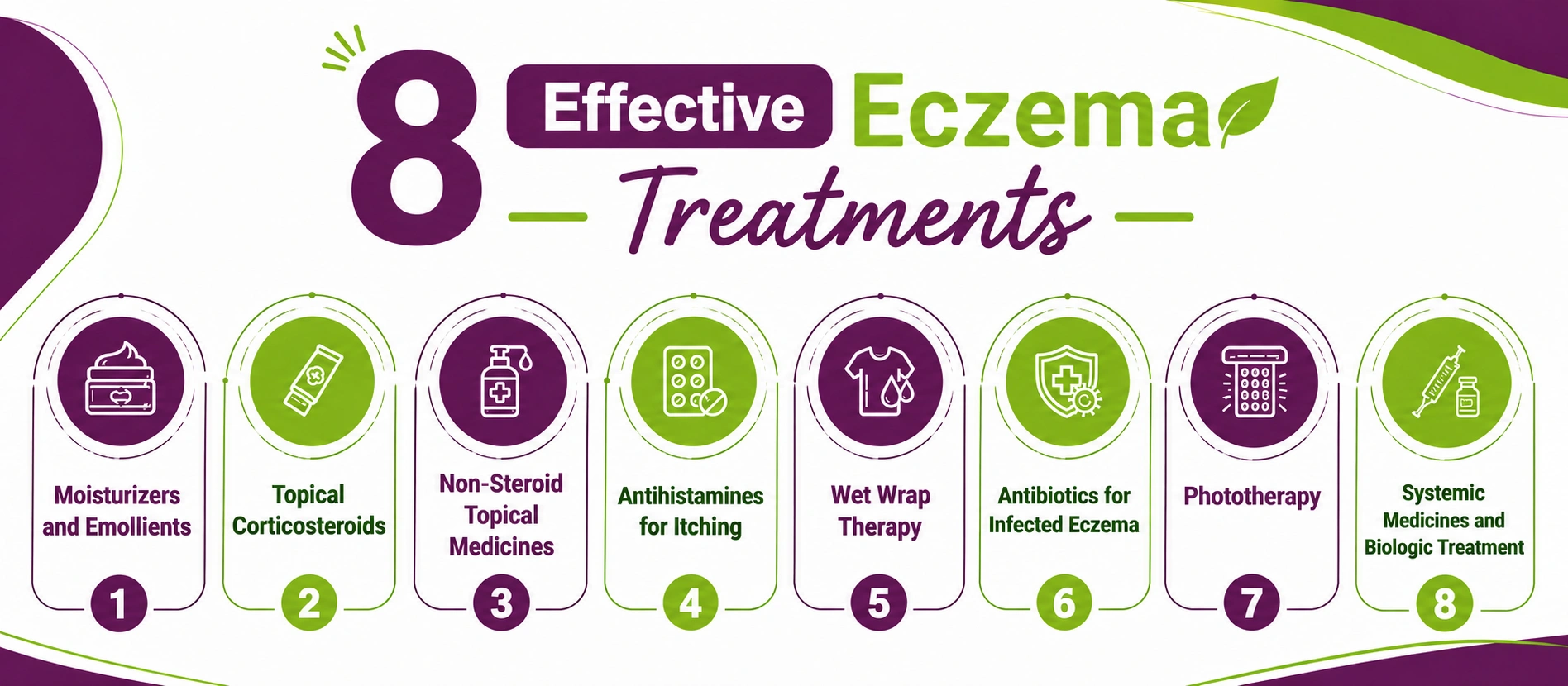
At first, utilize simple home remedies to calm the skin symptoms and avoid increasing irritation. For moderate or severe eczema, topical medicines by a dermatologist may be required.
1. Moisturizers and Emollients
Moisturizers or emollients are the most basic and effective treatment for eczema. They help keep the skin hydrated, restore the skin barrier function, and reduce the risk of eczema flare-ups.
Tips for Hydration in Eczema:
- Choose unscented moisturizer
- Apply immediately post shower
- Apply moisturizer multiple times in case of need
- Use ointments or thick creams for extremely dry skin
- Refrain from irritative or scented products
- Keep moisturizing even when symptoms are gone
If we moisturize the skin consistently, the dryness is reduced and the skin is shielded from experiencing the irritations that happen with sensitive skin.
2. Topical Corticosteroids
Topical corticosteroids are basically creams, ointments, lotions, or gels meant to calm inflammation , redness, and that annoying itchiness during eczema flare ups. They really should be taken only the way a doctor tells you, especially for children, eczema on the face , on the eyelids, or if it looks like it might drag on for a long time.
The potency and how long you use them depends on how severe it is, and also where the eczema is showing up.
Try not to go overboard with these steroid creams without medical guidance because if they re used wrong there can be side effects, even if you’re just trying to help at first.
3. Non-Steroid Topical Medicines
For some individuals, their medical practitioner may administer non-steroid topical creams or ointments. When steroid use needs restraint or when eczema is present on sensitive areas such as the face and eyelids, the doctor implements a more cautious approach. Often, these are considered as a last resort and thus safe to use only when the skin condition requires additional care.
Besides, you must not use these drugs without consulting your dermatologist first.
4. Antihistamines for Itching
Those who find that itching causes them to lose sleep may be prescribed antihistamines for short-term relief by a healthcare professional. It helps some of the patients to easily get to sleep during those terribly bad flare-ups, you know.
Antihistamines, however, are not suitable for every individual, so they should be taken only after physician’s recommendation.
5. Wet Wrap Therapy
Wet wrap therapy might be a recommended option to consider when eczema is at moderate to severe level. It is quite effective in reducing itch, enhancing skin hydration, and calming irritated skin.
However, careful implementation of this therapy is required and it is best to administer it with medical supervision especially when it comes to very sensitive children.
6. Antibiotics for Infected Eczema
Doctor may prescribe antibiotics or some other forms of treatment specifically for infection when a patient has eczema that has become infected.
Signs of infected eczema include:
- Yellow crusts
- Pus or fluids coming out
- More pain
- Swelling
- Fever
- Quickly spreading redness
- Warm feeling of the skin
- The rash getting bigger or worse
One should never neglect infected eczema and must get a doctor’s help as soon as possible.
7. Phototherapy
Light therapy, which is also called phototherapy, can be a treatment for the cases of eczema that persist or are quite difficult, especially when the usual treatments are not sufficient. Usually, it is done under the supervision of a consultant so that there is some control and you are not left alone with it. Normally, it is not the first option for everyone and it is best to leave it to the specialists after a thorough medical examination and diagnosis.
8. Systemic Medicines and Biologic Treatment
For very severe eczema not responsive to topical therapies, doctors may recommend oral drugs, injectable medications, or biologic therapy. Generally, these therapies are reserved for moderate to severe eczema and must be conducted under a physician’s supervision, not a home-experiment. People should not start any of these medications by themselves, without first seeing a dermatologist.
Note: The treatment methods for eczema can differ when it comes to kids and adults because kids have very sensitive skin.Thus always consult an expert before starting the treatment.
Home Care Tips for Eczema Management
Along with medical treatment, daily skin care plays a major role in eczema management.
Eczema Skin Care Routine
- Avoid harsh chemical-based skin care products
- Always moisturize skin, especially after taking a shower
- Avoid unnecessary scratching of the skin
- Wear breathe cloths especially in summers
- Use mild chemical-free boby wash, soaps and cleansers
- Wash your daily wear before re-using them frequently
- Avoid direct application of deodorants and performed directly on the skin
- Identify the triggers
- Avoid going to warm places in case you have eczema
- Avoid hot showers especially in summers
A simple and consistent eczema skin care routine can help reduce dryness and irritation.
When Eczema Needs Urgent Medical Care
The moment you suspect eczema is severe, painful, infected, or not improving, then the best option would be to seek help from a doctor or dermatologist.
Areas that would benefit from medical attention are:
- Presence of pus or yellow crusting
- Fever accompanies the rash
- Severe pain
- Very quick spread of redness
- Swelling of the eyeball
- Babies with severe eczema rash
- Bleeding or skin cracking
- No symptom improvement even after care
- Loss of sleep because of intense itching
- Repeated flare-ups
Prompt intervention is necessary to avert the condition from worsening and to limit complications.
Conclusion
Eczema is a pretty common skin problem, it usually causes the skin to be really dry, itchy, inflamed, and it feels like the skin is more sensitive than normal. It might be caused by weakening of the skin barrier, there could be a reaction of the immune system, genes determine it, and of course the skin can be triggered by irritants or allergens. Weather changes, stress, or other triggers can also contribute.
Treatment-wise, individuals usually rely on consistent moisturizing, identifying and managing triggers, sticking with gentle products, and sometimes using topical medications. If there is an infection, treatment of the infection becomes important, and if the condition still does not settle down, a dermatologist-directed treatment will be required. This is because eczema is characterized by flare-ups, so the main objective is to keep the condition under control in the long run.
If your eczema cannot be controlled easily, causes severe discomfort, appears to be infected, spreads to other areas, or it keeps you awake at night, you should go see a dermatologist who can give you the right diagnosis and treatment.